TOONS WHO RAN FOR PRESIDENT
Cartoon Characters in Presidential Campaigns
By Doug Boilesen, February 11, 2026
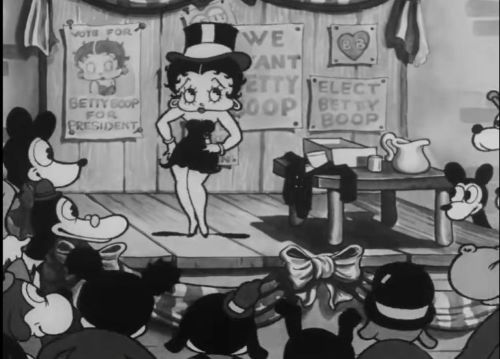
The following are examples of cartoon and popular culture characters who have run for President of the United States. Each candidate has recorded sound and/or phonograph connections as part of their campaign. Fleischer Studios animated short film starring Betty Boop for President "was released by Paramount Pictures on November 4, 1932, four days before that year's presidential election day" ((Wikipedia).)
This is the first cartoon character running for President to appear on screen with sound.
Betty Boop for President vs. Mr. Nobody, 1932
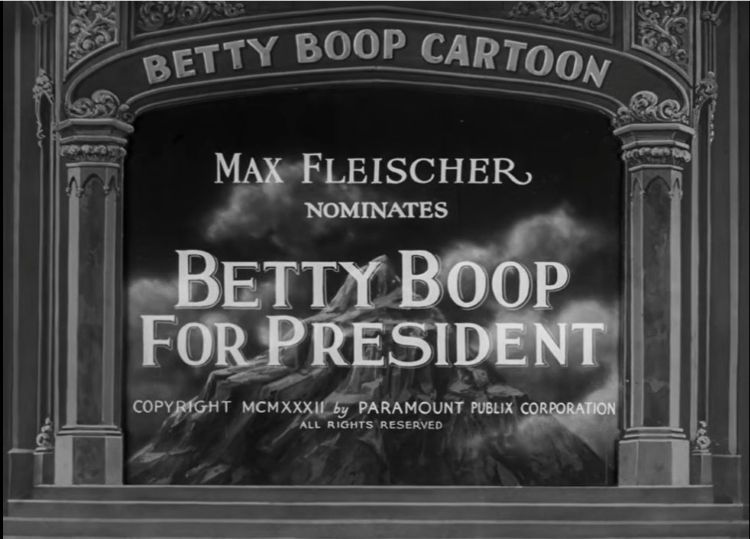
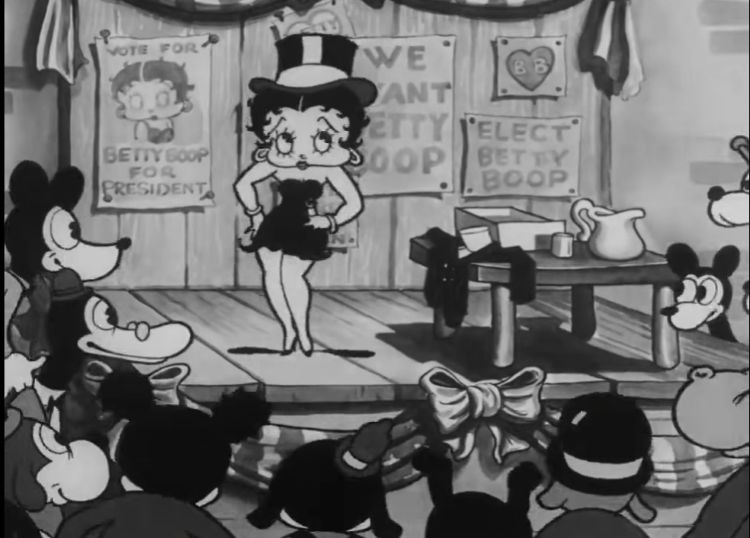
Watch Betty Boop for President
For more Betty Boop Connections with the Phonograph, see PhonoToons' Betty Boop.
Olive Oyl for President, 1948
Famous Studios (the previous Fleischer Studios), "produced a Popeye the Sailor cartoon entitled Olive Oyl for President. This 1948 short reuses many of the gags, as well as a reworked version of Betty's "If I Were President" song."
Description: After Popeye and Olive Oyl listen to many Presidential speeches, "Olive
wonders aloud why no women are running for president, to which Popeye replies, "because they're too busy runnin' fer huskbands! Undaunted, Olive is certain what the United States needs is a female president, an idea Popeye ridicules mercilessly. Olive beans Popeye over the head with a frying pan, and shouts "Yes, if I were President..."
Now unconscious and dreaming, Popeye visualizes a world where Olive is President.
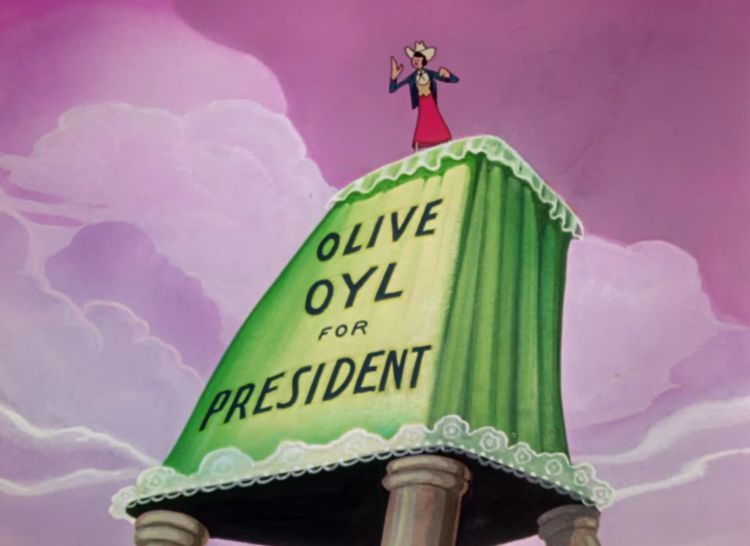
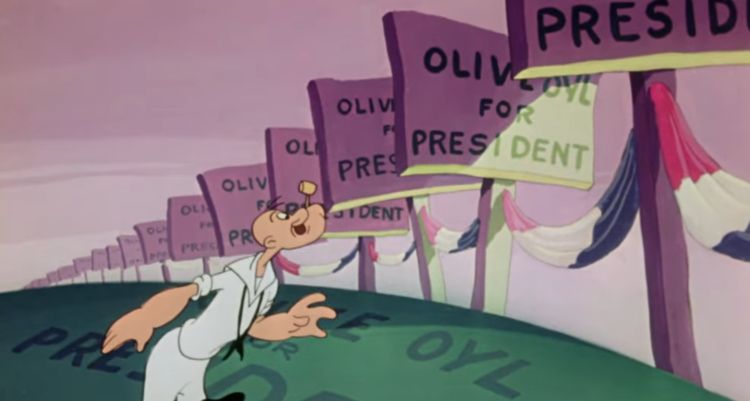
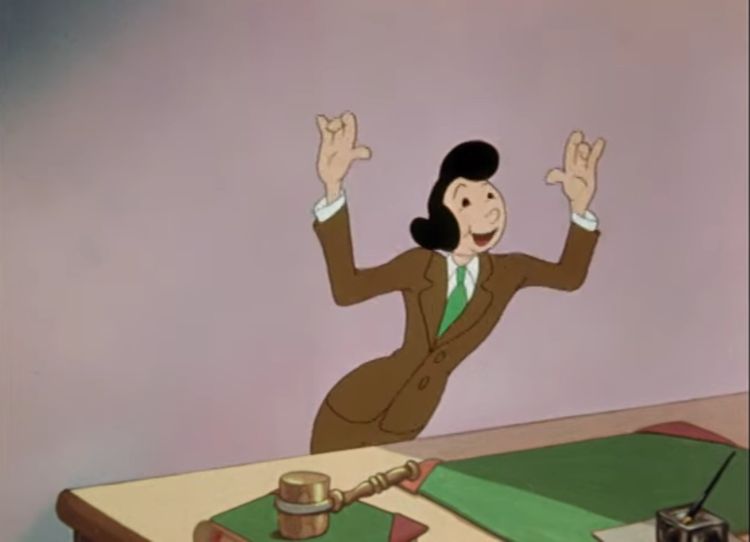
Olive is elected President.
Popeye awakens enthusiastic about the prospect.
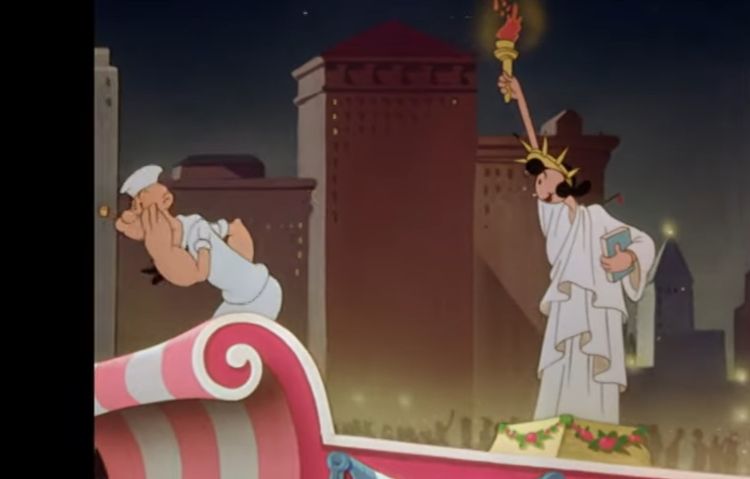
Olive Oyl soon finds herself riding a parade float, dressed as the Statue of Liberty. Standing beside her, an enthusiastic Popeye shouts into the crowd as a mock auctioneer, "For Presidink...Olive Oyl... Sold to America!" Olive Oyl for President." (Wikipedia).
Pogo the possum for President, 1952 & 1956
"John Crawford Kelly created the characters of Pogo the possum and Albert the alligator in 1941 for issue No. 1 of Dell's Animal Comics in the story "Albert Takes the Cake"." (Wikipedia and Don Markstein's Toonopedia. "Pogo Possum").
Pogo was a reluctant "candidate" for President (although he never campaigned) in 1952 and 1956. (The phrase "I Go Pogo", originally a parody of Dwight D. Eisenhower's iconic campaign slogan "I Like Ike", appeared on giveaway promotional lapel pins featuring Pogo, and it was also used by Kelly as a book title.) (Wikipedia.)
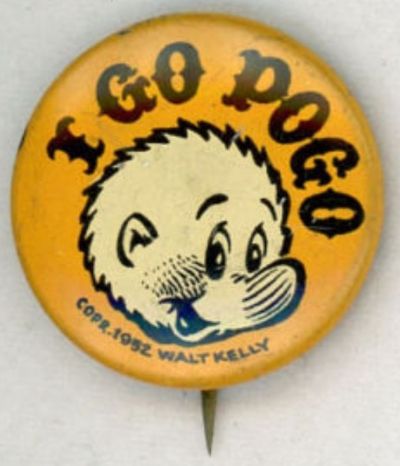
"I Go Pogo" Pin for the 1952 Presidential campaign.
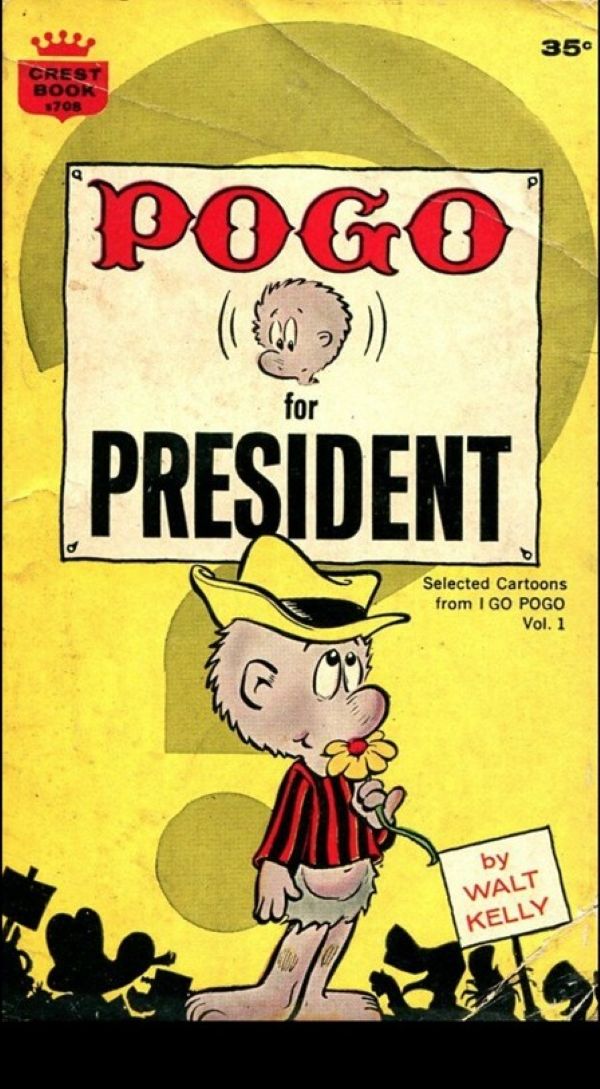
Cover and back of paperback "POGO for PRESIDENT" by Walt Kelly, Fawcett Crest, 1964.
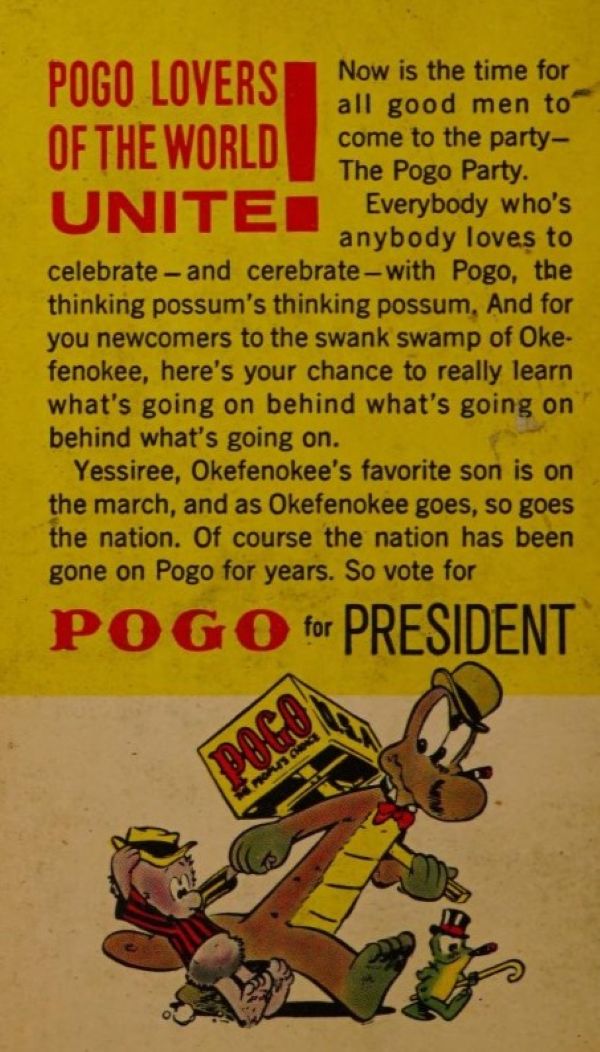
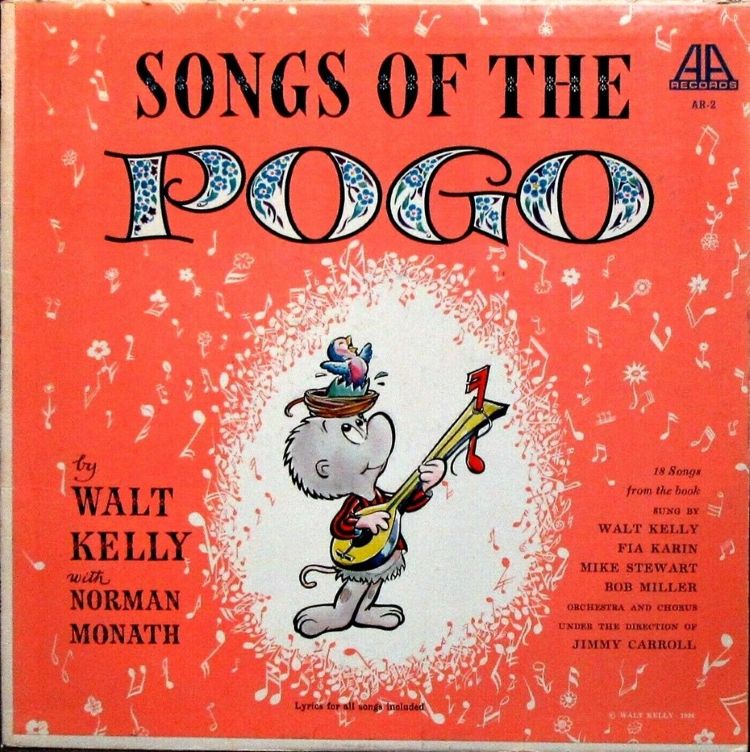
Songs of the Pogo by Walt Kelly, AA Records, 1956 album featuring "Go Go Pogo."
Howdy Doody for President, 1952
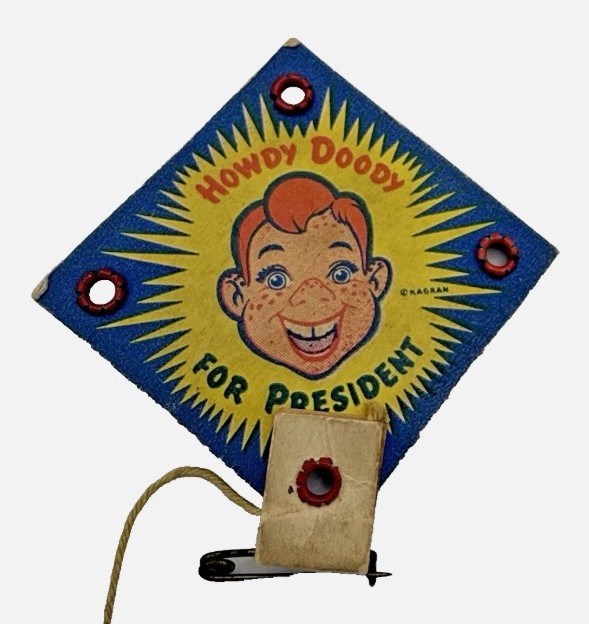
Howdy Doody for President, Poll Parrot Says, 1952
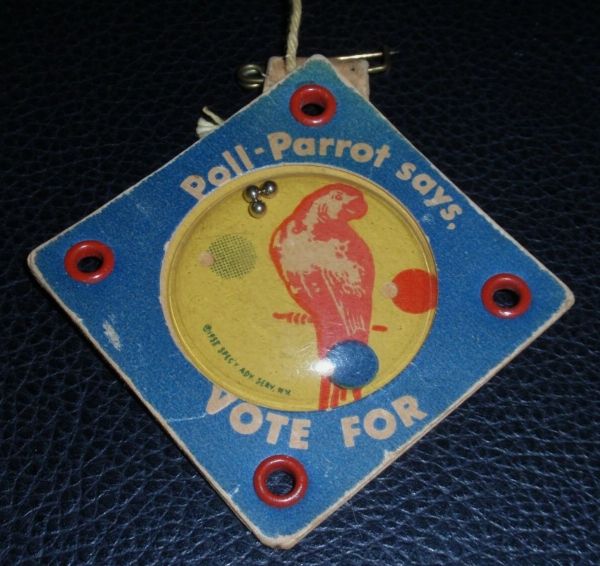
Vote for Howdy Doody for President, Poll Parrot Says, 1952
Howdy Doody announced his candidacy for President on March 4, 1948. He would run again in 1952. Buffalo Bob wrote two campaign songs for Howdy: I'm for Howdy Doody! and Howdy Doody for President. For the Vice-President and the cabinet chosen by Howdy, see Amaranth Publishing Co.'s website "Howdy Doody for President."
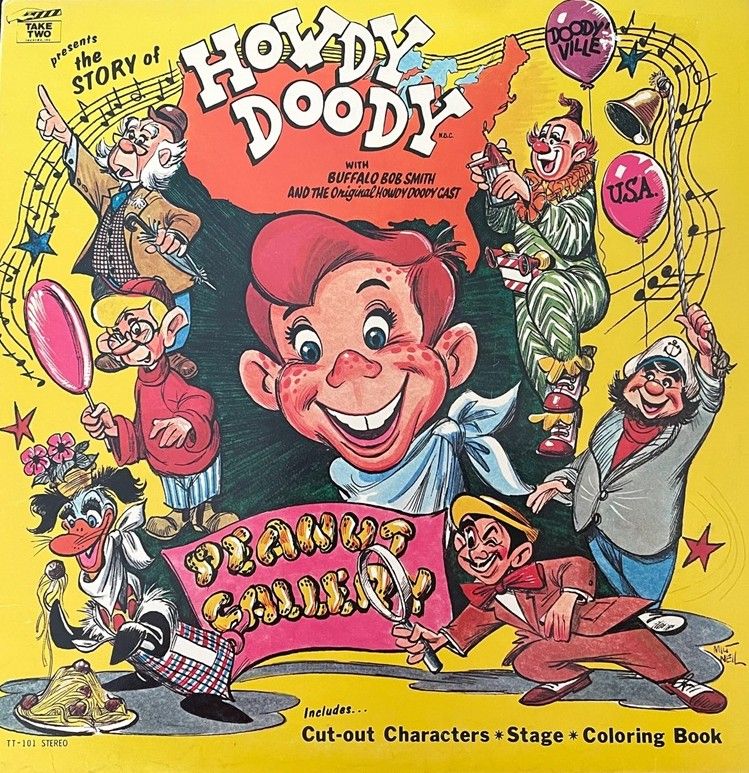
"The Story of Howdy Doody" which includes the song "I'm for Howdy Doody," coloring book and cut-outs. Take Two Records, 1974.
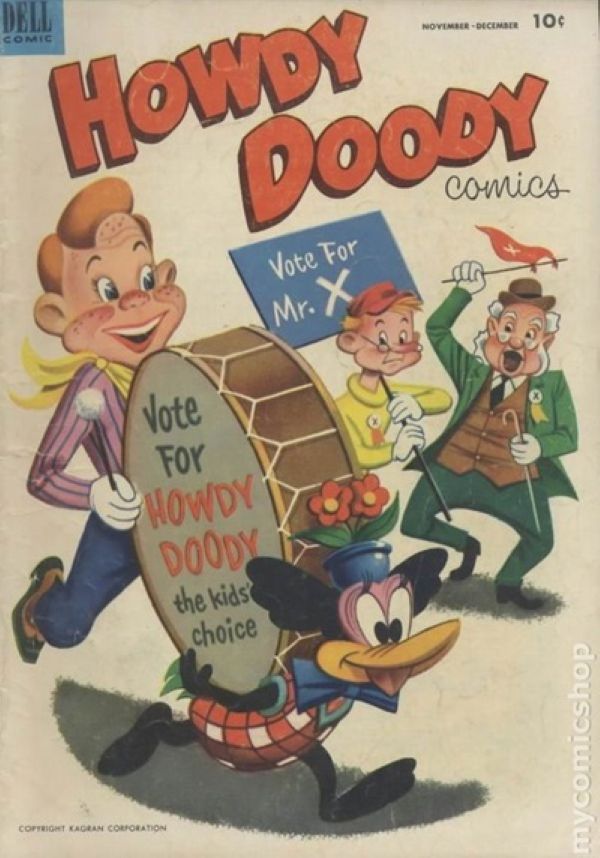
"Vote for Howdy Doody," Dell Comics, #19, November 1952.
For more Howdy Doody Phonographia see Howdy Doody and the Phonograph.

The Saturday Evening
Post, September 4, 1954
Huckleberry Hound for President, 1960

Huckleberry Hound for President, Dell/Gold Key, October, 1960.
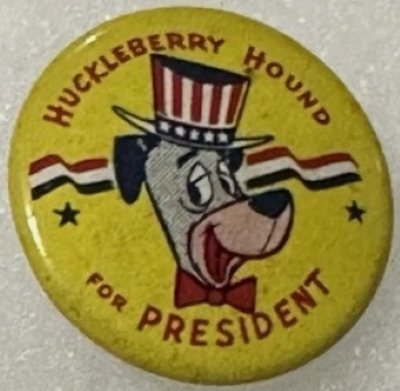
Huckleberry Hound for President pin, c.1960.
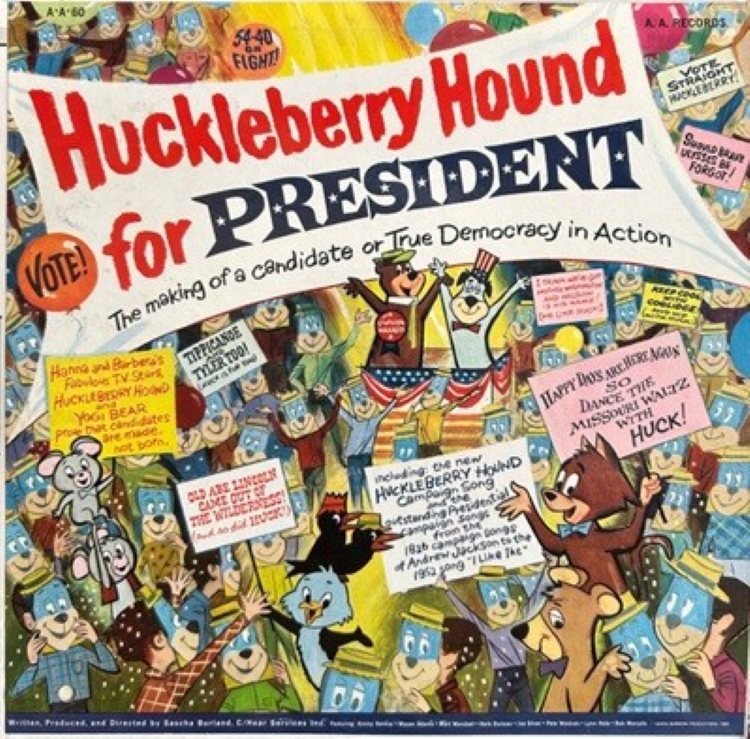
©Huckleberry Hound for President LP, A.A. Records, 1960.
Huckleberry Hound was also the campaign manager for Yogi Bear for President in 1964.
Popeye for President, 1956
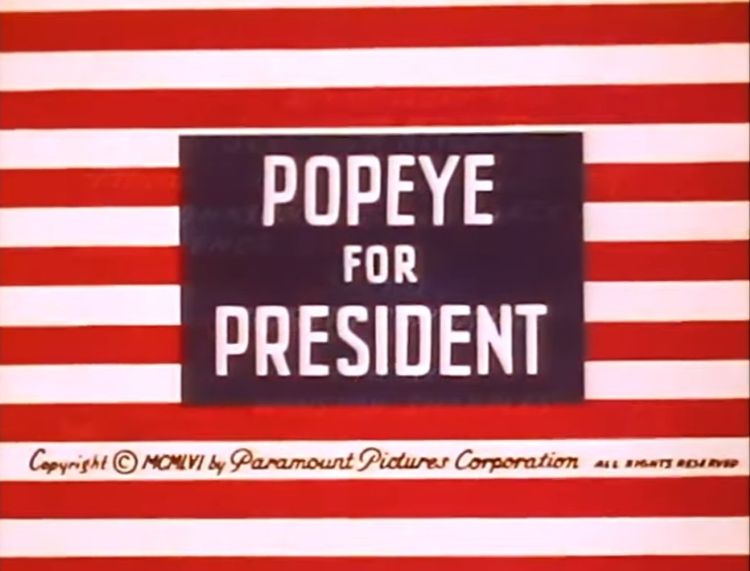
Watch Popeye for President, 1956 by Paramount Pictures by arrangement with King Features Syndicate Inc.
Popeye ran for President in 1956 as the "Spinach Party" candidate "promising free ice cream for all the kiddies". Popeye was opposed by Bluto of the Blutocratic Party.
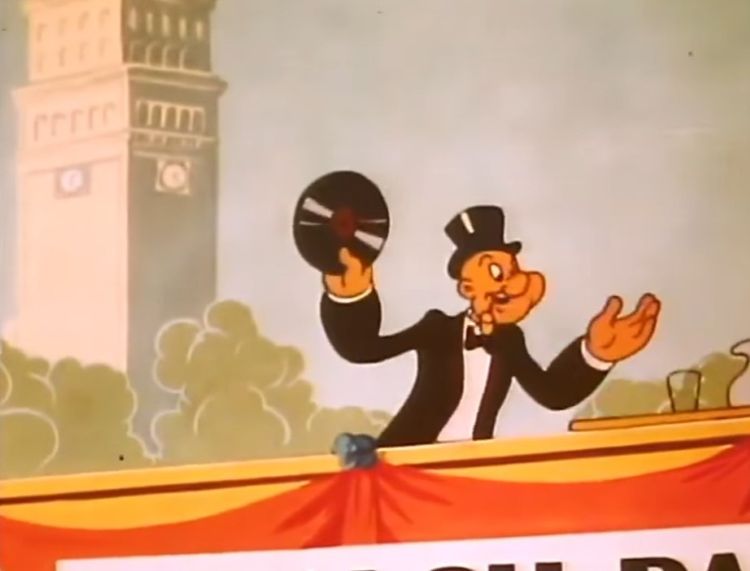
Popeye held up a phonograph record during a campaign speech saying "Here's my past record, folks, which speaks for itself!"
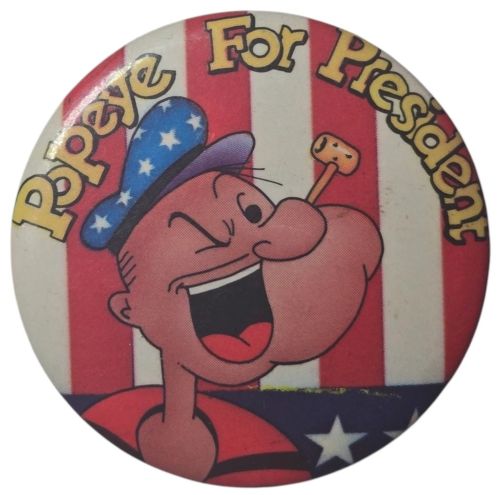
Popeye for President pinback button pin, 1.75" diameter.
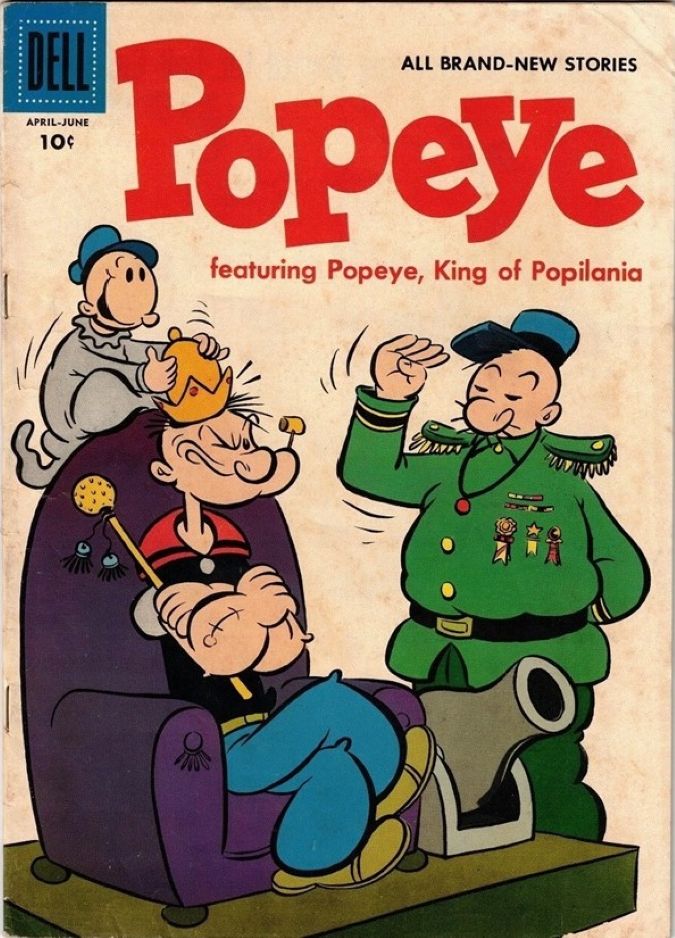
Popeye was never elected President, but he wanted to be a King so Popeye bought a deserted island from his friend King Blozo and named it Popilania. Published June 1956 by Dell/Gold Key/Whitman. Art and Cover by Bud Sagendorf.
For more Popeye Phonographia see Popeye and the Phonograph.
Alvin for President, 1960
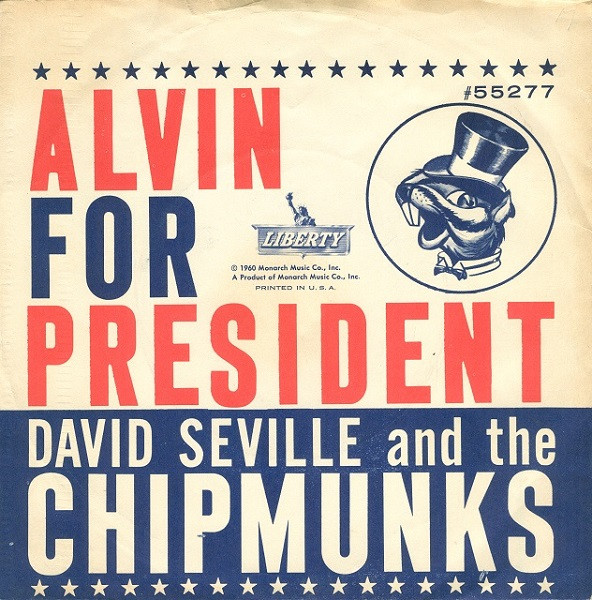
Alvin for President, 7" 45 RPM, Liberty Records, F-55277, Ross Bagdasarian, Monarch Music Company, 1960. Alvin ran for President in 1960 with a campaign promise of "two bicycles in every garage".
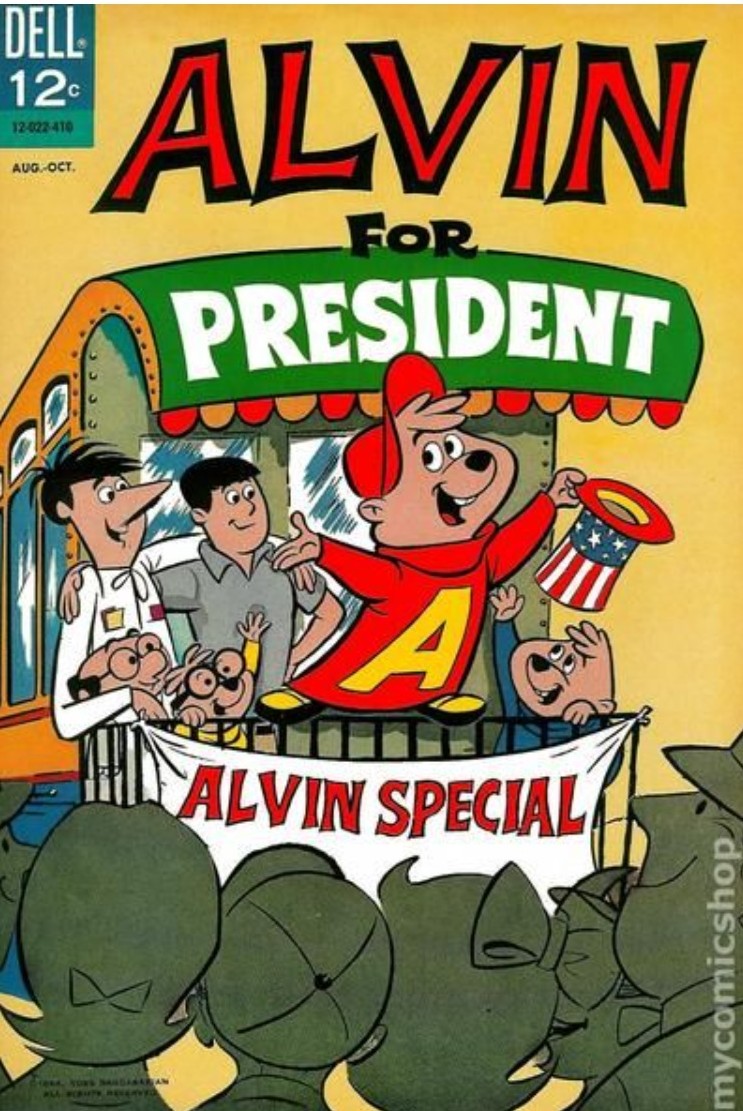
Alvin for President, Dell Comics, Issue No. 1, October 1964.
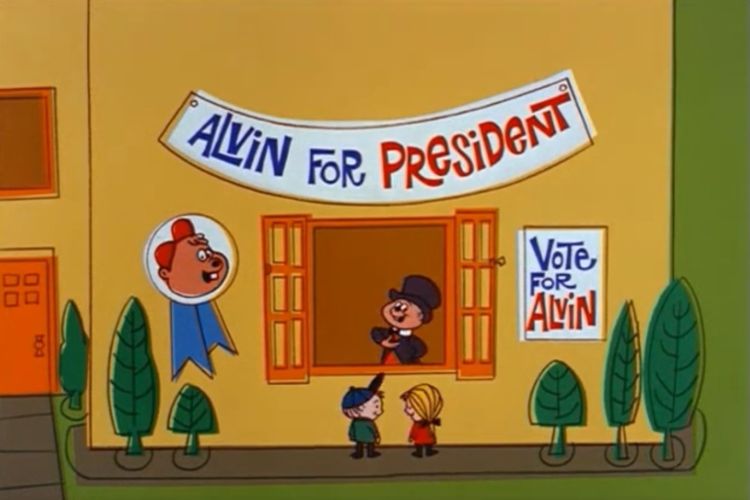
Alvin for President, Dell Comics, Issue No. 1, October 1964.
WATCH The Alvin Show E010B, Alvin For President
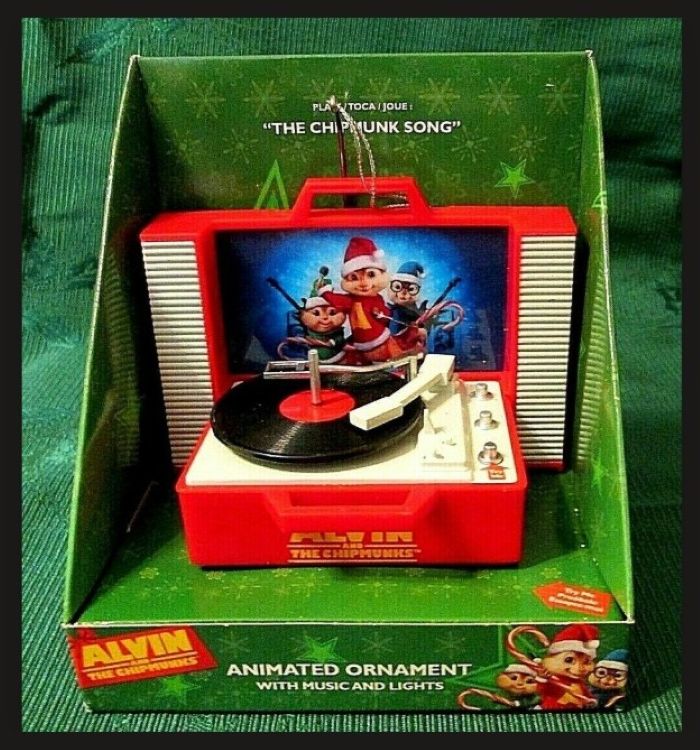
Alvin and the Chipmunks Christmas Ornament, animated with lights plays "The Chipmunk Song", Fox/Regency/Monarchy 2014.
Alfred E. Neuman for President, 1960 (and every four years later).
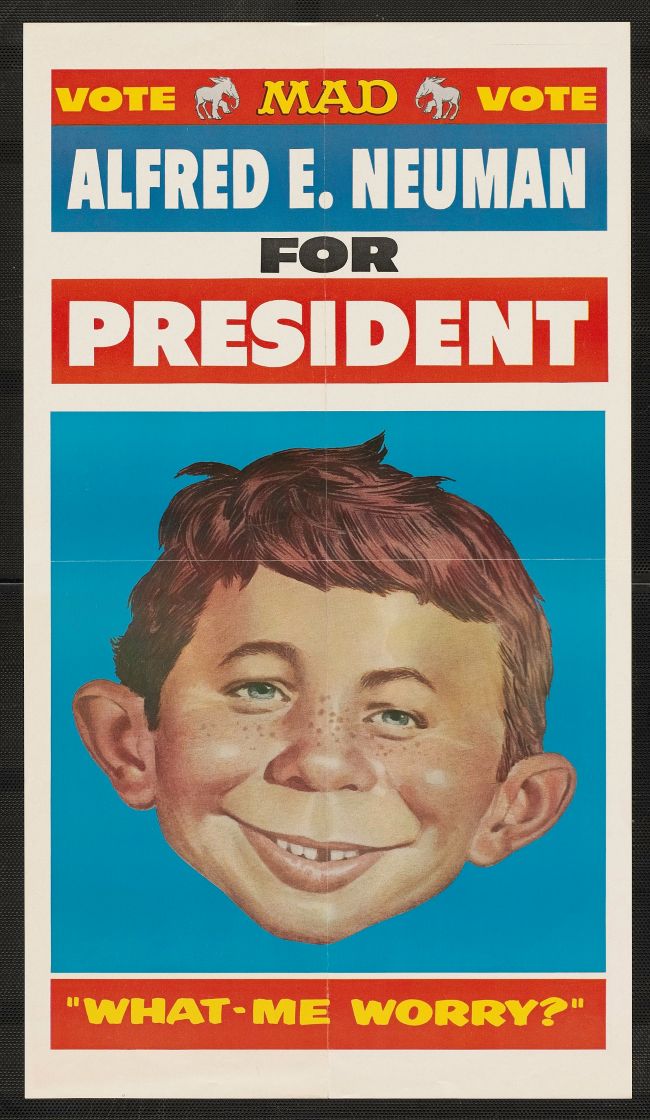
Alfred E. Neuman for President (Poster, 1984, The Smithsonian - The National Museum of American History)
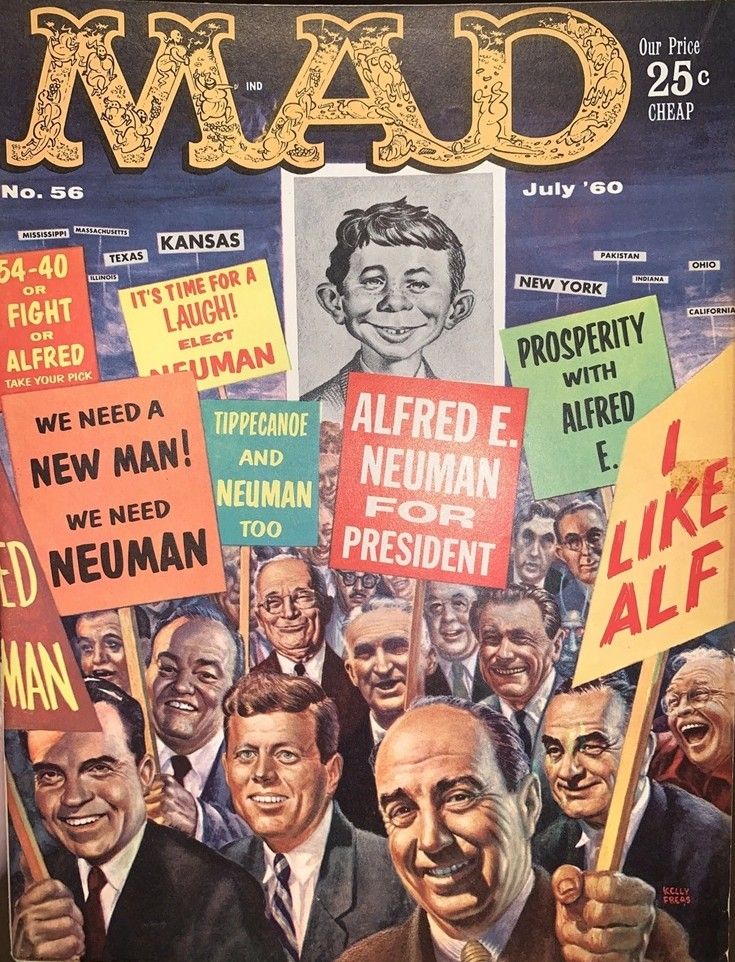
Alfred E. Neuman for President, MAD Magazine Cover, July 1960.
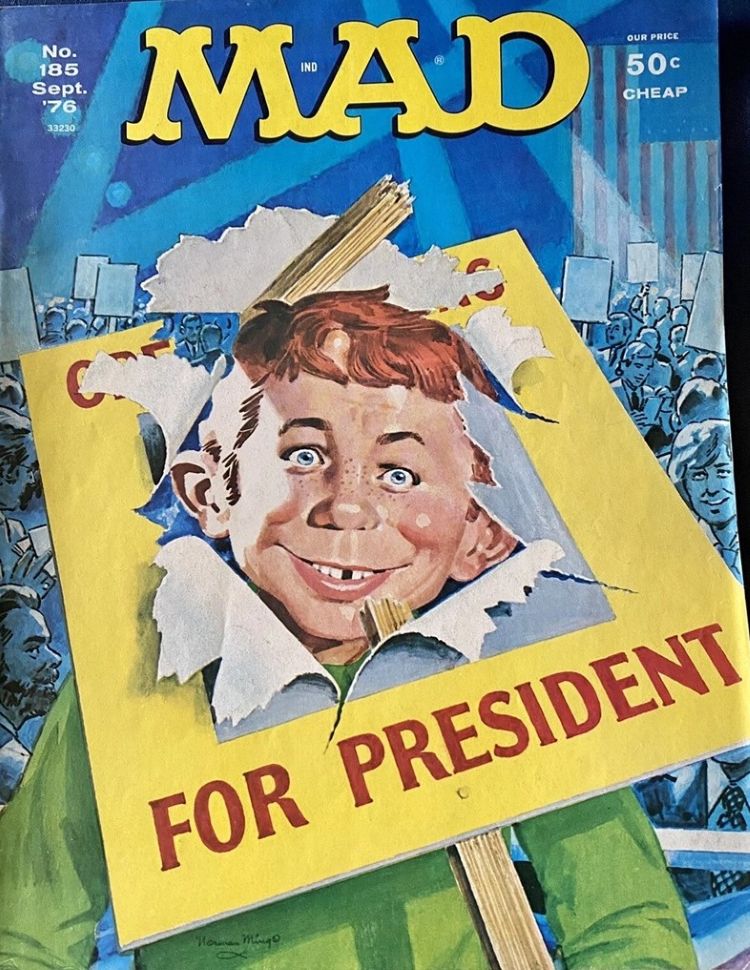
Alfred E. Neuman for President, MAD Magazine Cover, September 1976.
Alfred E. Neuman has run a fictional write-in campaign for President of the United States nearly every four years since 1956 when he debuted in MAD Magazine's issue #30 in 1956. In 2019, Donald Trump referred to Democratic presidential candidate Pete Buttigieg as "Alfred E. Neuman."
"Neuman’s campaign is characterized by his "What—Me Worry?" slogan, which serves as a commentary on apathetic or overwhelmed voters." (Pro Quest by Thomas E. Spencer).
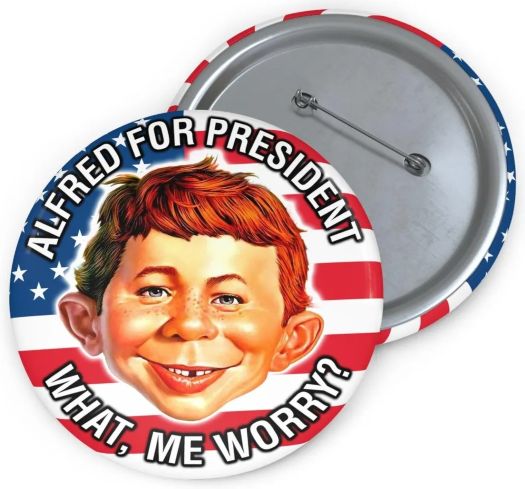
After Trump was elected in 2024, why would anyone worry if Alfred E. Neuman was elected President of the United States?
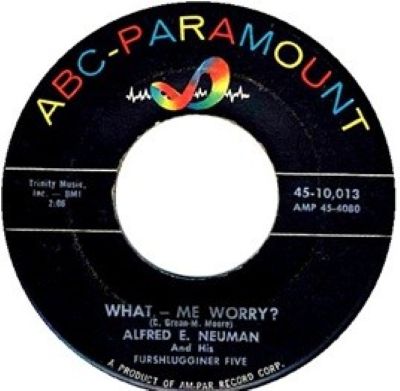
Alfred E. Neuman, "What - Me Worry" 45 RPM, ABC/Paramount Records, 1959.
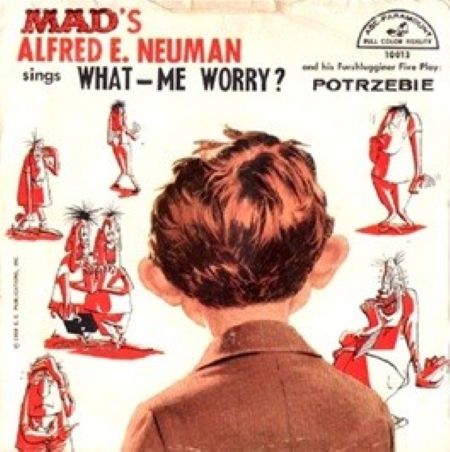
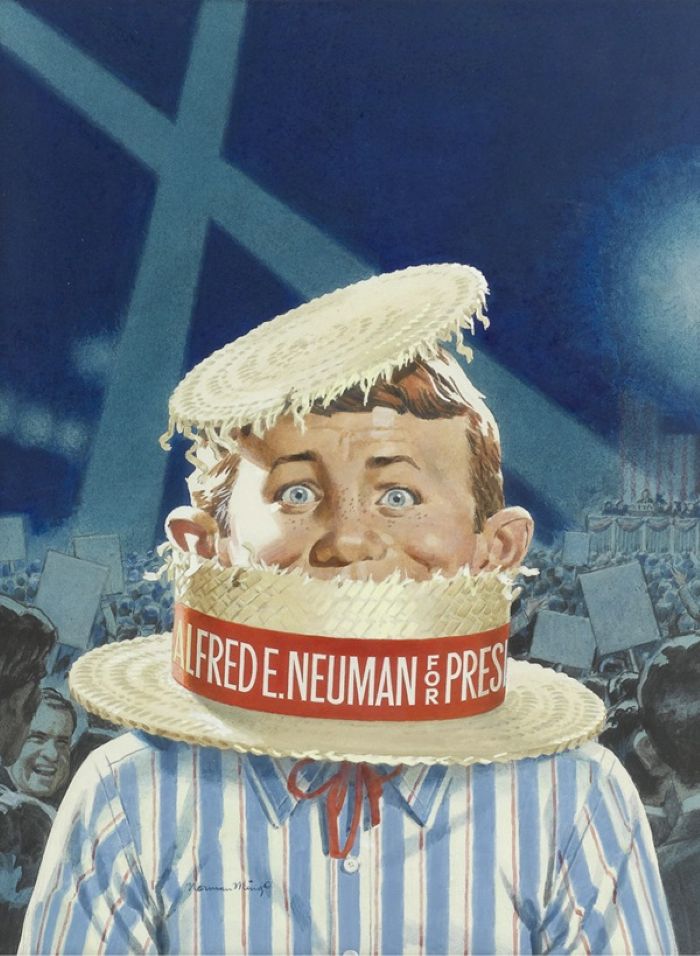
Alfred E. Neuman for President, MAD Magazine Cover, September 1972. Artwork by Norman Mingo
Magilla Gorilla vs. Yogi Bear, 1964
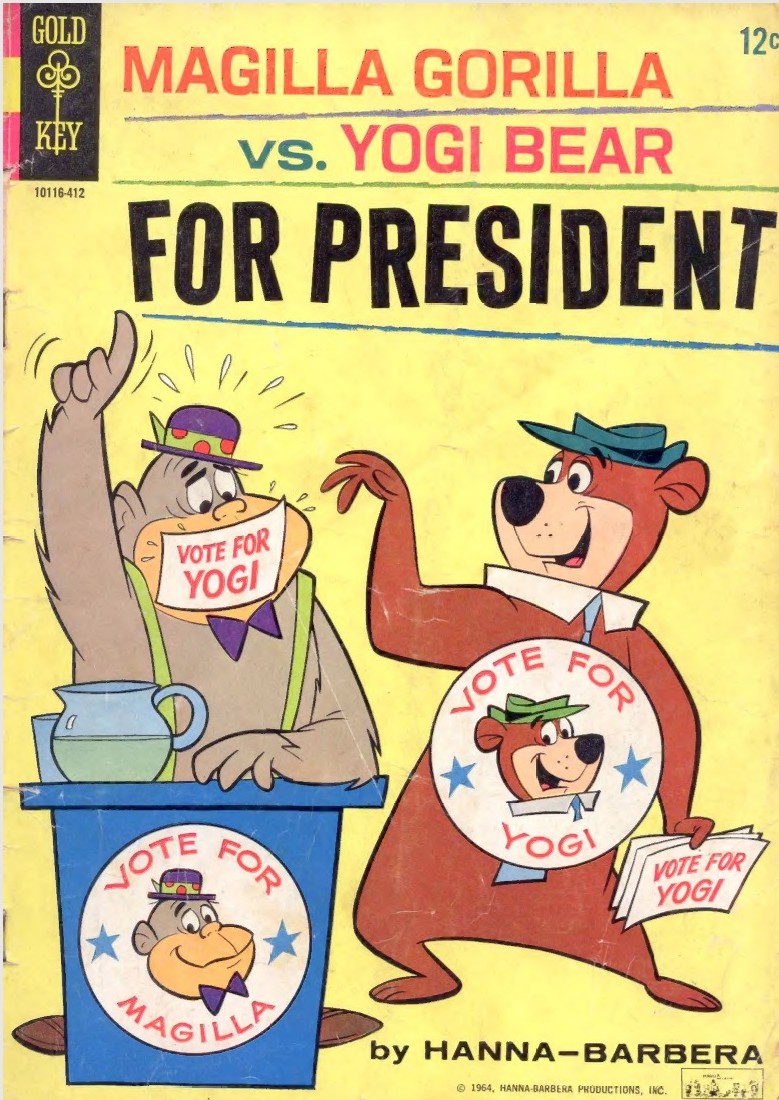
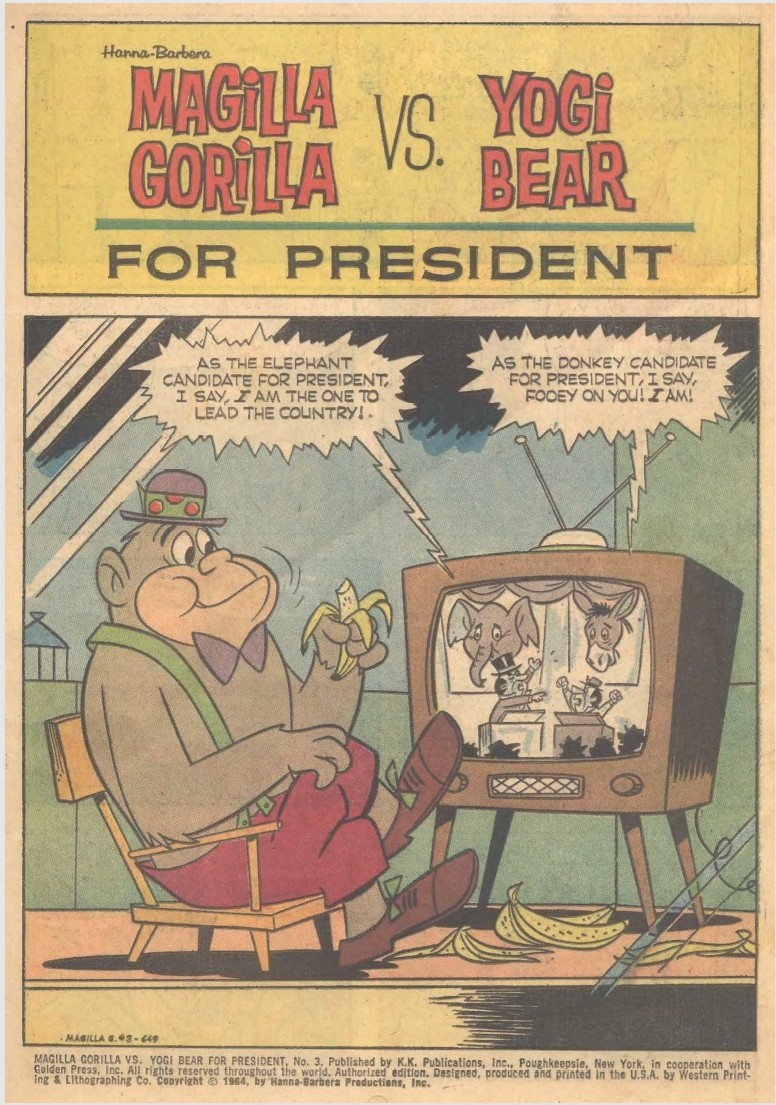
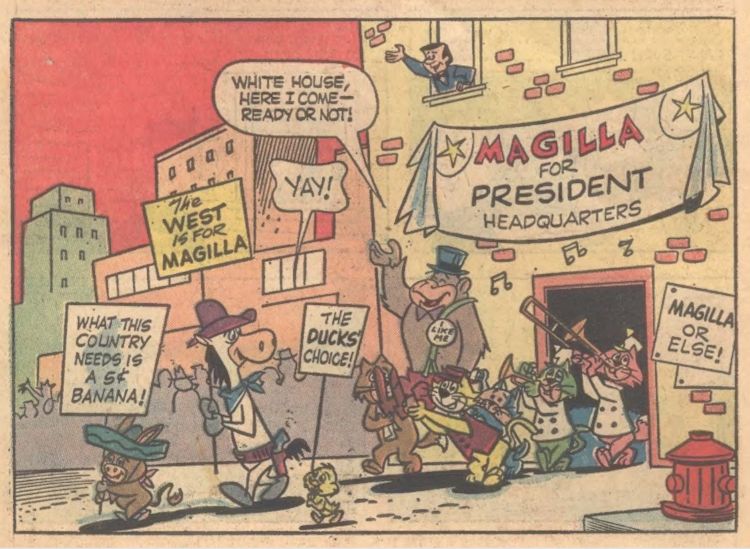
"Magilla Comic, December 1964, Golden Key Issue 3. Magilla Comics were an adaptation of the Hanna-Barbera cartoon series. This issue featured Magilla deciding that if an elephant and a donkey were in the Presidential race, why not a Gorilla. This would be followed by Yogi Bear, with the support of Boo Boo, becoming Magilla's opponent for President. Huckleberry Hound became Yogi's campaign manager. Magilla had Top Cat as his campaign manager and the support of Pixie and Dixie, Quick Draw McGraw, and other Hanna-Barbera characters.
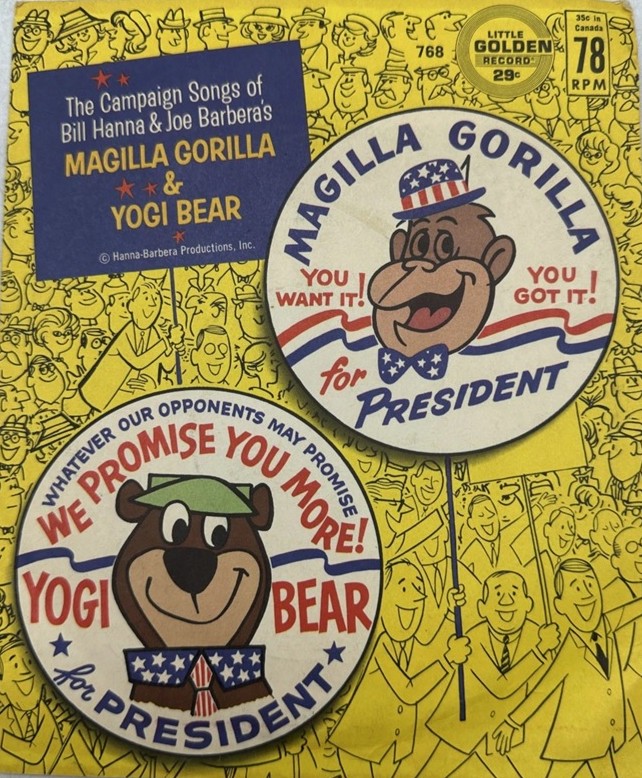
"The Campaign Songs of Bill Hanna and Joe Barbera's Magilla Gorilla & Yogi Bear, Little Golden Record, 78 RPM, 1964.
For more of the comic book strips and 1964 campaign highlights see Archive.org's Magilla Gorilla for President page.
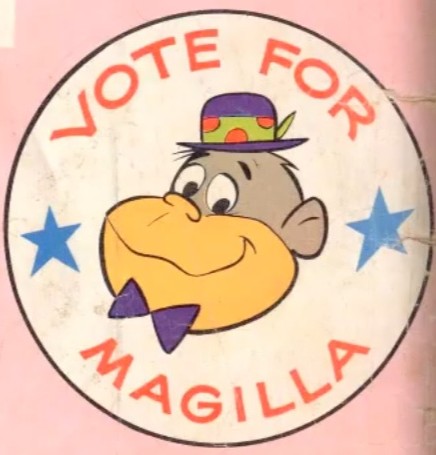
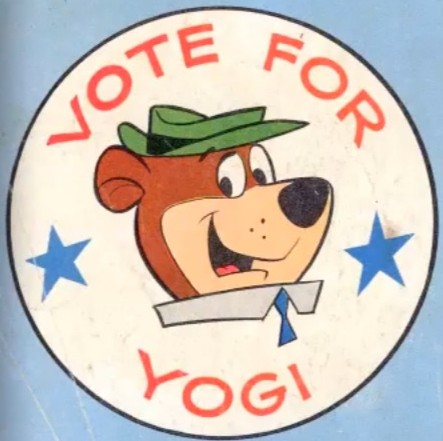
A page by page viewing of the comic is also available on YouTube at Magilla Gorilla vs. Yogi Bear for President 1964.
Snoopy for President, 1968
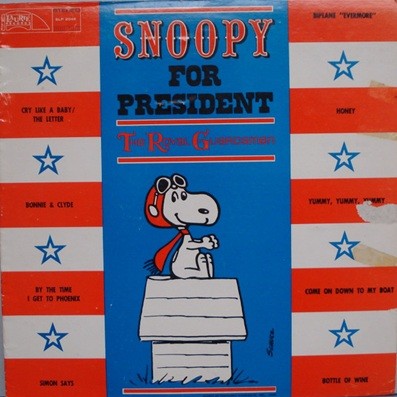
"Snoopy for President" Studio Album by The Royal Guardsman, Laurie Records, SLP 2046, 1968.
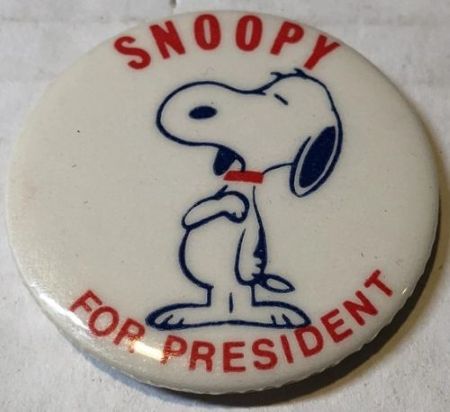
Snoopy for President pin.
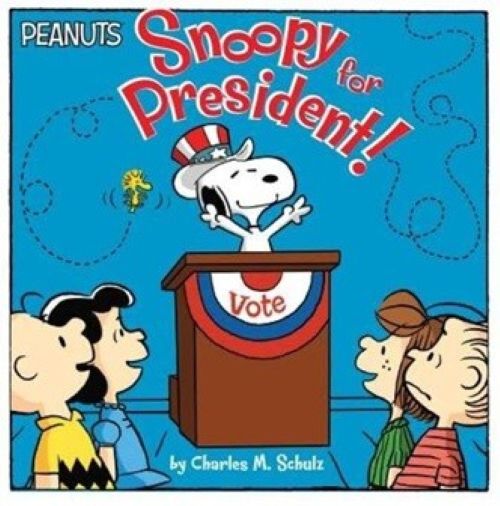
Snoopy for President by Charles Shultz, Simon Spotlight, 2016 paperback.
See more about Snoopy's campaign for President at Wikipedia.
Woman Woman for President, 1943
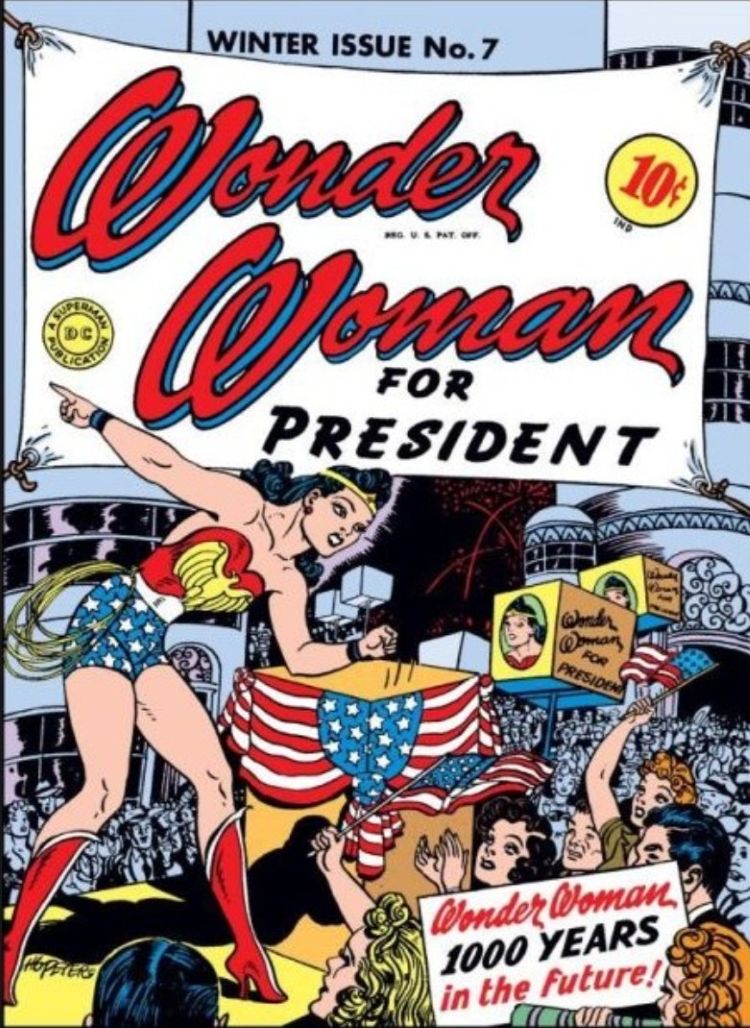
Wonder Woman for President, Wonder Woman DC Comics, Winter Issue No. 7, 1943.
Woman Woman for President, 1972
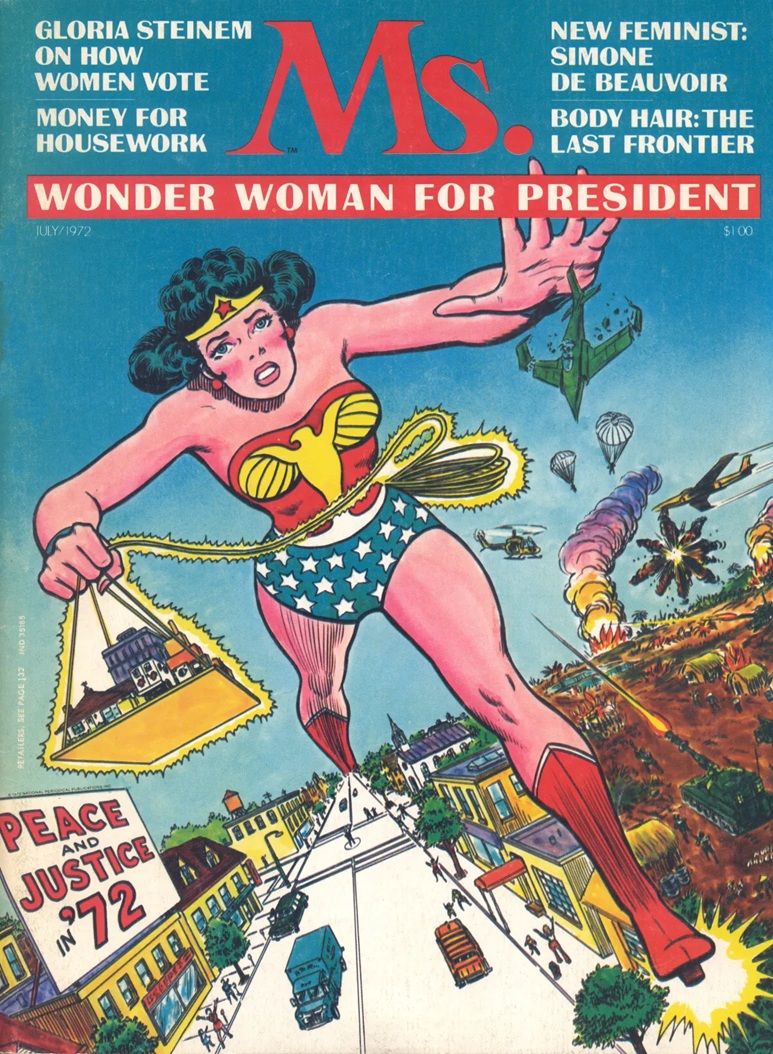
Ms. Magazine, July 1972.
"In 1972, Ms.‘s first cover featured Wonder Woman underneath a banner reading “Wonder Woman for President.” It helped secure the hero’s place as an icon for liberal second-wave feminism." ("How a Magazine Cover From the 1970s Helped Wonder Woman Win Over Feminists," by Katie Kilkenny. Pacific-Standard Magazine, June 21, 2017) (Photo courtesy of Ms. Magazine).
"Wonder Woman’s origins as a peace- and justice-seeking hero—and onetime political figure—felt appropriate to represent Ms.‘s progressive values" according to Joanne Edgar, a writer and editor who joined Ms. magazine while it was producing the preview issue. (Ibid.)
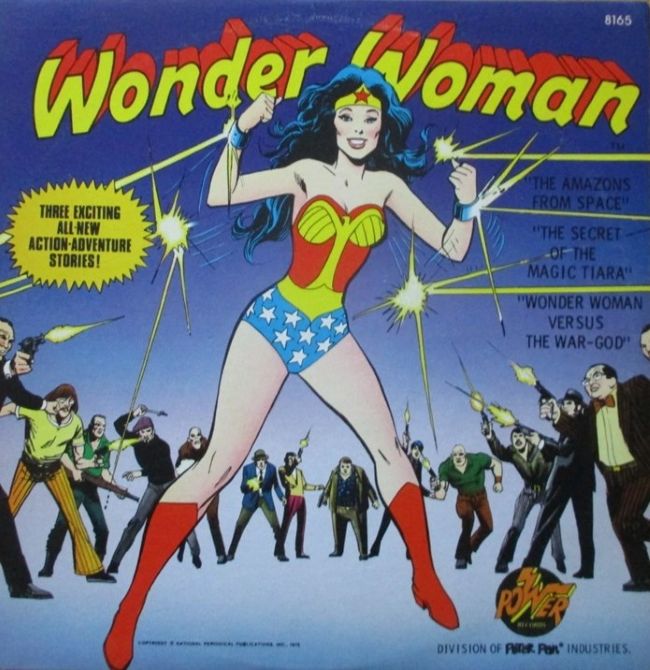
Wonder Woman LP, Power Recorods, DC Comics, 1975.
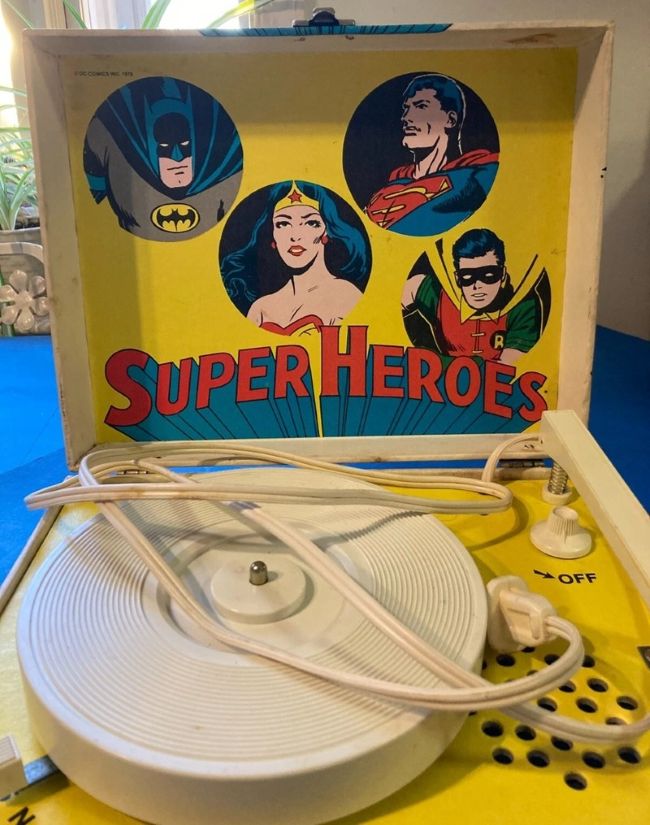
Super Heros Phonograph with Wonder Woman, Deejay Corp, SP-14 Phonograph 45 and 33 1/3 RPM, 1978. (FP0633)
Winnie the Pooh for President, 1972 and 1976
Running under the slogans "Pooh in '72" in 1972 and "Winnie's a Honey of a Candidate" in 1976," Pooh's campaign promises included "honey in every pot" and “lick the high price of ice-cream cones.” See Disney Fandom Wiki "Pooh for President" for more details.
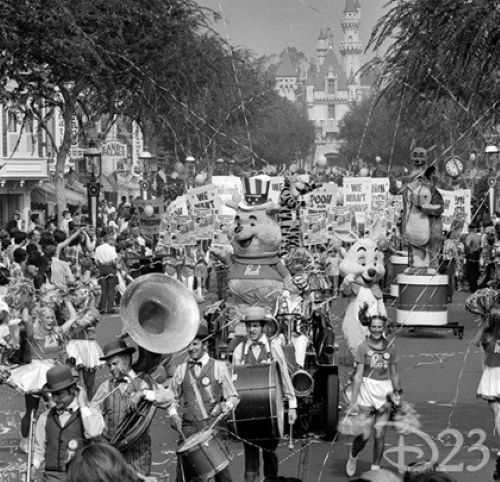
Pooh's Ticker Tape Parade down Mainstreet U.S.A. in Disneyland (Courtesy Disney.fandom.com, Ibid.)
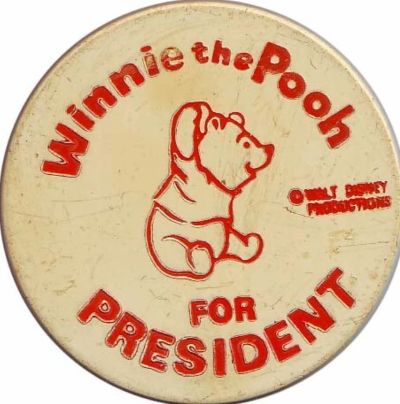
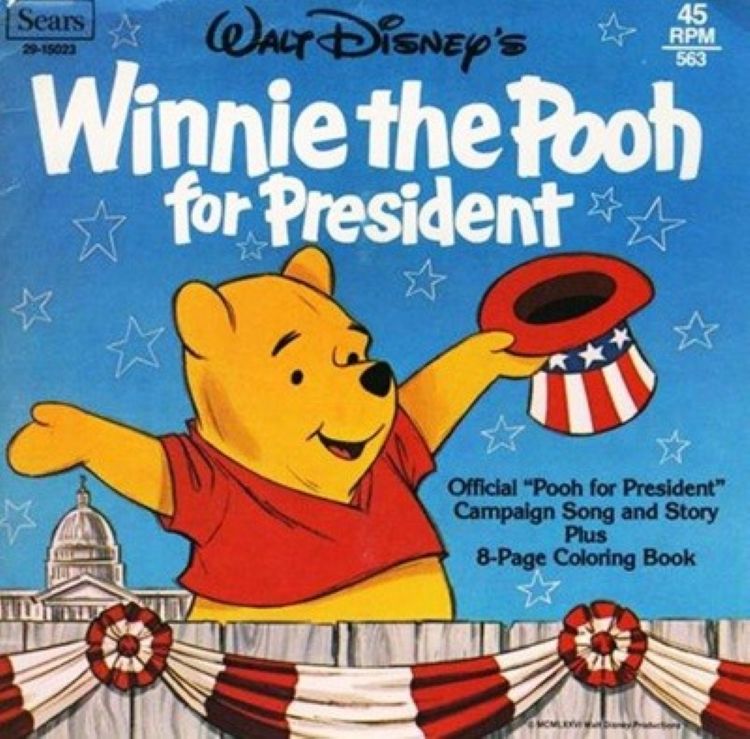
Winnie the Pooh for President, Disneyland 563, Sears 29-15023, 1976. 7" 45 RPM.
Side A - Winnie The Pooh For President [Story]; Music By – Stratton & Christopher*; Voice Actor – Billy Simpson, John Fiedler, Laurie Main, Sterling Holloway.
Side B - "Winnie The Pooh For President" Campaign Song; Voice Actor [Pooh] – Sterling Holloway; Written-By – Larry Groce. (Discogs)
For more Winnie Phonographia see "Winnie the Pooh Phonographs"
Big Bird for President, 1975

In this Sesame Street episode 797, Big Bird finds his friends listening on the radio where the President of the United States has just made an important speech. Big Bird is impressed how everybody stops and listens and decides that the job seems like a pretty good job and that after you make a speech everybody cheers.
Big Bird decides to run for President and visualizes himself as President and sings a song "Hey, I'm President Bird..."

Ultimately, Big Bird found out there were too many people that wanted things fixed and it prevented him from roller skating, so he ended his dream of being President.
For Big Bird connections with the Phonograph and recorded sound, see Fisher-Price and Big Bird Phonographs.
Bozo for President, 1984
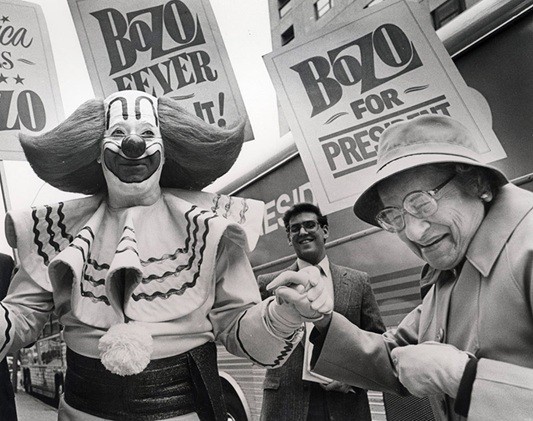
Bozo for President! On December 22, 1984 Larry Harmon, who originated 'Bozo the Clown,' decided to run for president of the United States. (UPI Archives). Harmon famously said that his platform is to “bring laughter back into America” by putting a clown in the White House. Bozo is registered as a write-in candidate for the “Big Whig Party” in “more than half the states,” according to a news release.
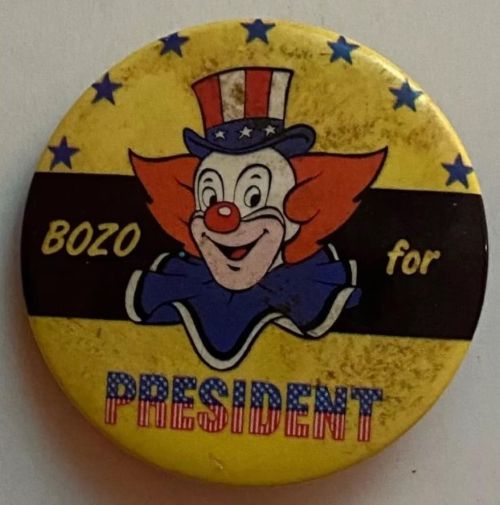
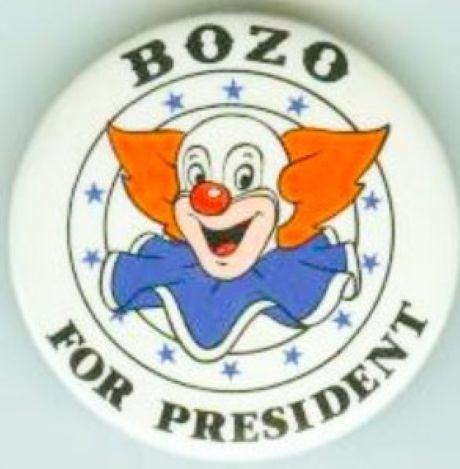
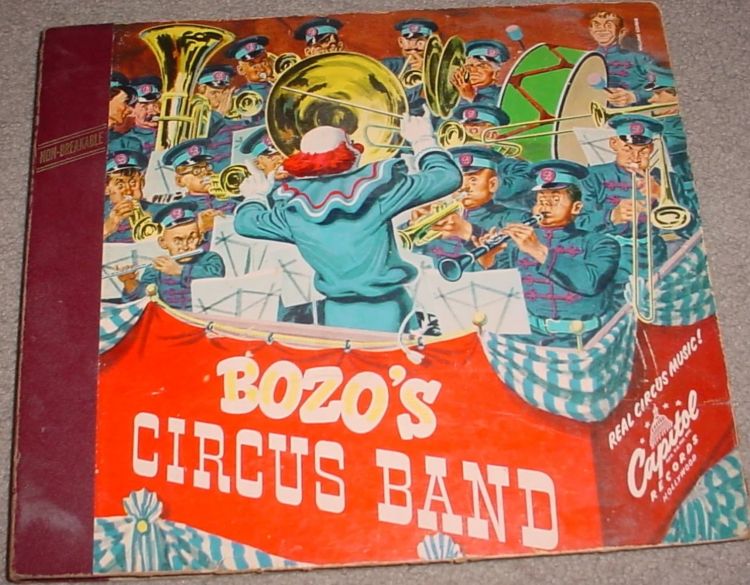
The Capitol Records' "Bozo's Circus Band" was a 3 record 78 RPM album released c.1949. Circus music seems the best choice for American Presidential elections.
For more Bozo Phonographia see Bozo and the Phonograph
Smurfs for President, 1984
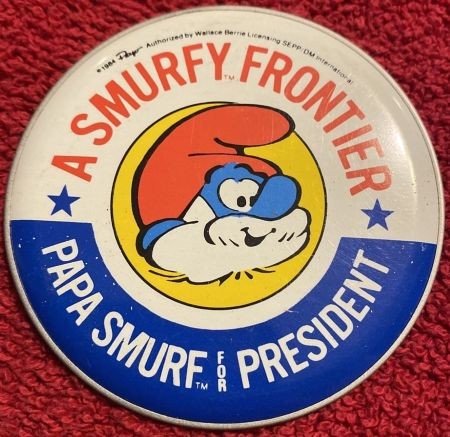
Papa Smurf for President, A Smurfy Frontier", 3" button, 1984.
Some political campaigns in Toonland may simply have campaign buttons, supporting your favorite cartoon character and satirizing the quality of human candidates. These "candidates" can actually get some write-in votes. In the case of the Smurfs' Presidential buttons, there were five premiums available which were free inside the 1980s Smurfberry Crunch cereal box. No official Smurf Presidential campaign, but the buttons showed a potential voter's taste in cartoons (and in cereal).
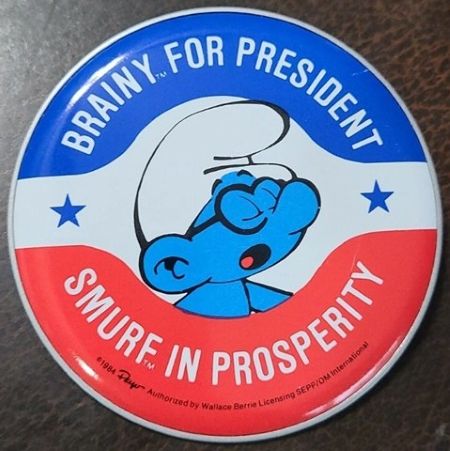
Brainy for President, Smurf in Prosperity", 3" button, 1984.
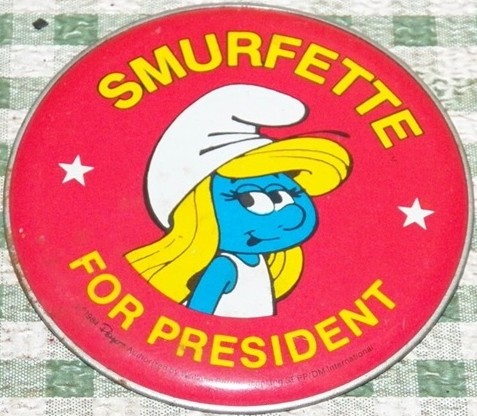
Smurfette for President", 3" sticky badge button, 1984.
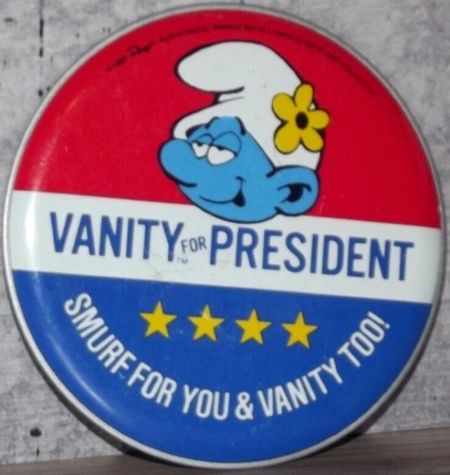
Vanity for President" - Smurf for You & Vanity Too! 3" sticky badge button, 1984.
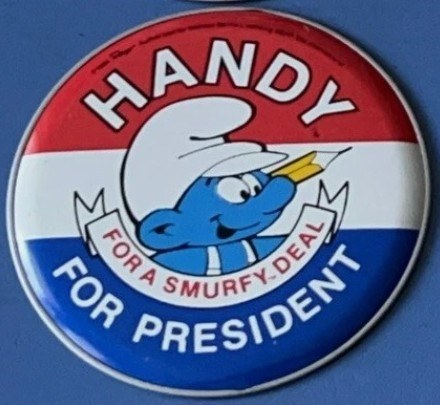
"Handy for President - For a Smurfy Deal," 3" sticky badge button, 1984.
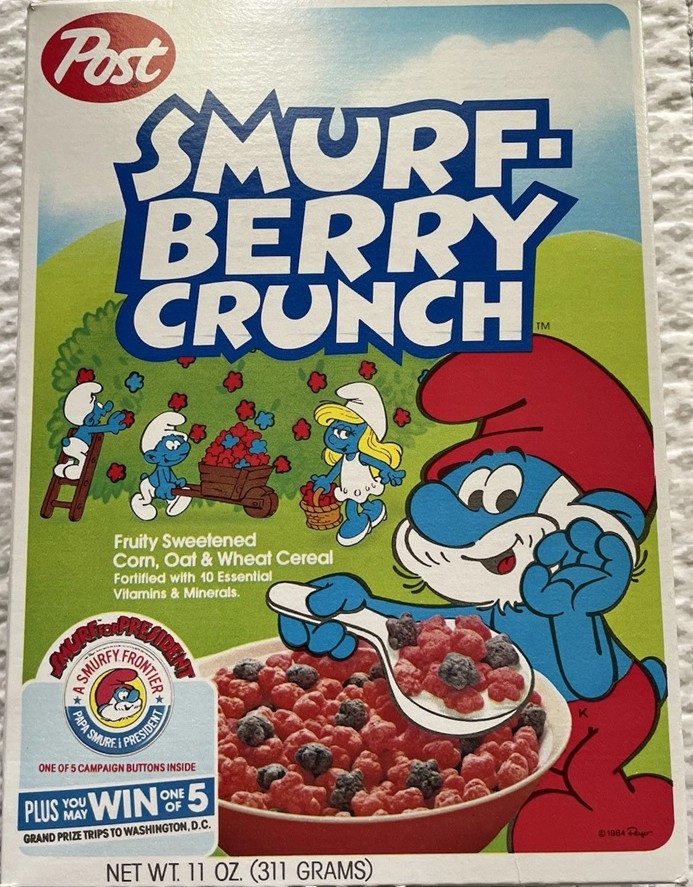
Smurfberry Cereal with free Smurf President campaign button, 1984.
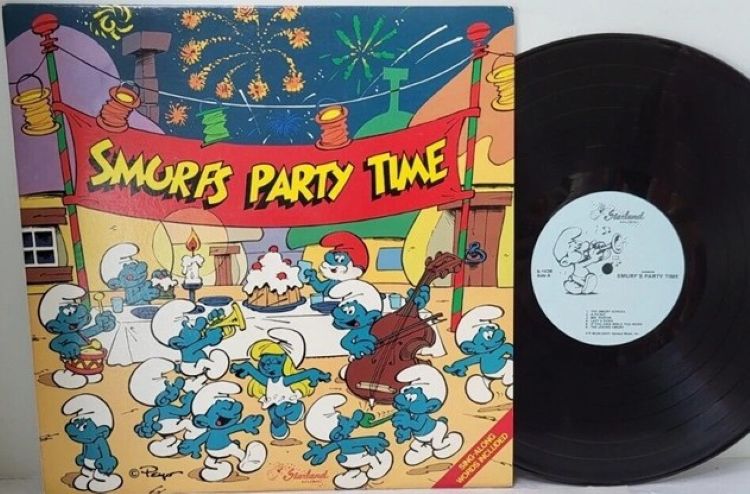
"Smurf's "Party Time" Album, LP, 1983.
For more Smurf Phonographia see Smurfs and the Phonograph
Bullwinkle for President, 1988

"Bullwinkle for President" was the featured story of Blackthorne Publishings 1988 3-D comic.
Bullwinkle runs for President and wins by a landslide, but then Pottsylvania invades the U.S. in a bid for war reparations. Bullwinkle has only one chance to set things right – and it involves Mr. Peabody's Way-Back Machine. 32 pages, B&W with 3-D effects.

Bullwinkle for President pin, 1984.

Bullwinkle and Rocky Marvel Comic, May 1988. Presidential Race with Reagan.
For more Bullwinkle connections with the Phonograph, see Rocky and Bullwinkle Phonograph and Recorded Sound Connections

©1988 FarWorks,
Inc.
Daffy Duck for President, 1997 and 2004

Daffy Duck for President is a children's book, published by Warner Bros. and the United States Postal Service in 1997 to coincide with the release of the first Bugs Bunny U.S. postage stamp.
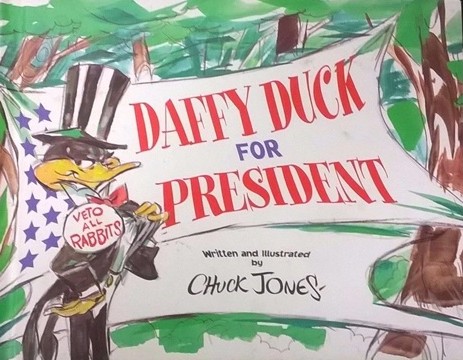
For more details, see Wikipedia's "Daffy Duck for President."
In 2004, Warner Bros. released a four-minute animated short based on the book and likewise named "Daffy Duck for President."
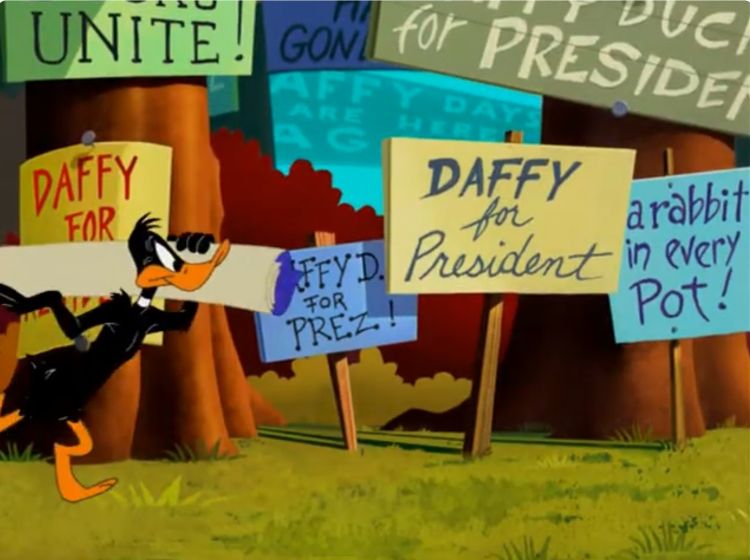
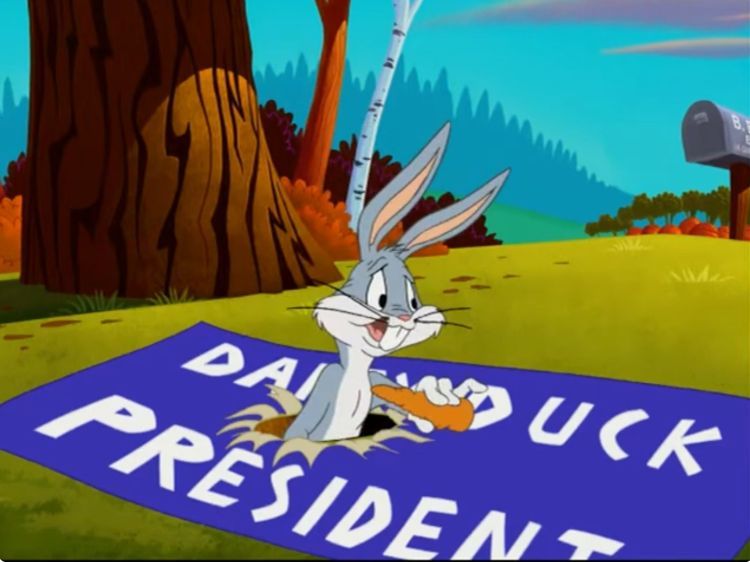
Daffy's political goals were to outlaw Duck Season in favor of a perpetual Rabbit Season. Instead Daffy learns about the United States Constitution and with Bugs' help, "that it is "We the People" who run the country, not any one man or duck.
In the 1965 Warner Bros. cartoon, "Go Go Amigo," Daffy isn't running for President but he is in a music store running after Speedy Gonzales who is driving Daffy nuts by putting on a record and then running to the next phonograph and playing another record.

Daffy is close behind but has to stop at each phonograph to take the record off, break it in half, and then continue chasing Speedy.
Watch Go Go Amigo to see this Daffy Phonograph connection where running is for something that has nothing to do with the Presidency.
Homer for President, The Simpsons, 2004
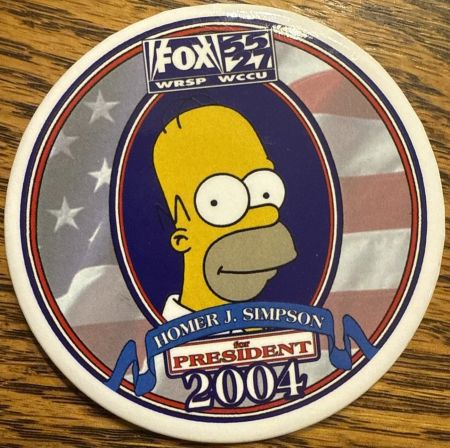
Homer for President, 3" pinback button, FOX News, 2004.
Krusty the clown for President, The Simpsons, 2003
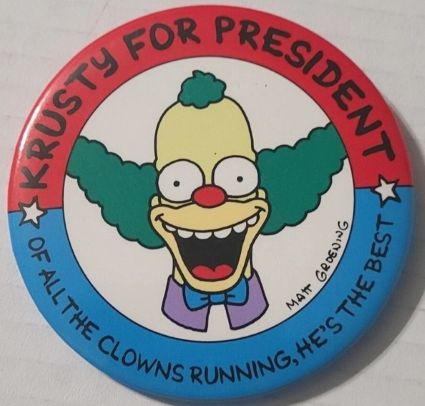
Krusty the Clown for President, 3" pinback pin, c.2003.
Krusty has never officially run for President, however, in The Simpson's episode 14, Season 14, "Mr. Spritz Goes to Washington" Krusty is elected to Congress and eventually has a bill passed to change the flight path which had made the Simpsons' home uninhabitable because of airplane noise. (Wikipedia, Mr. Spritz Goes to Washington.")
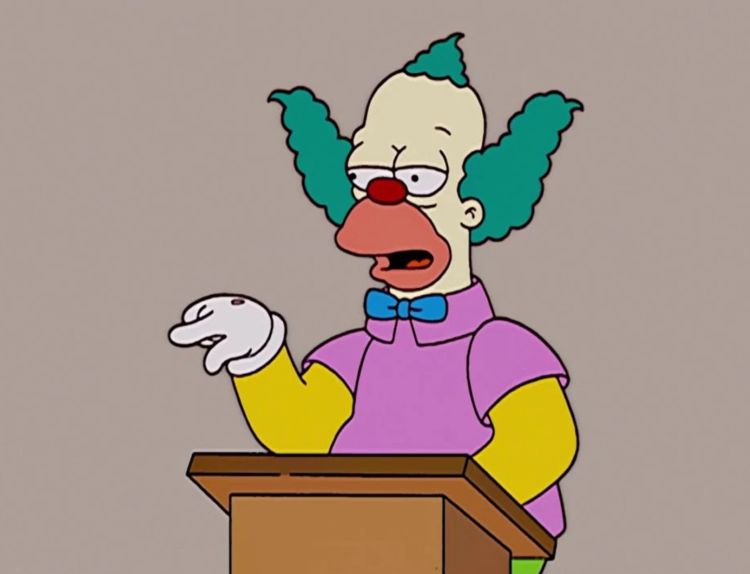
Krusty in Congress in "Mr. Spritz Goes to Washington, March 9, 2003. (Simpsons Fandom Wiki, Episode 305)
Krusty's voice is based on Bob Bell, who portrayed WGN-TV's Bozo the Clown. Krusty made his television debut on January 15, 1989, in the Tracey Ullman Show short "The Krusty the Clown Show". (Ibid.)
In the "Toon" world the themes of Clowns and the Circus and running for President are recurring themes.
For Krusty, "noise" from airplanes disrupted daily life. For most humans in popular culture, however, the noise from politics is the major noise problem with the internet and social media amplifying it to dangerous decibel units.
Even headphones are not the solution unless you use the noise cancelling feature or listen to something that doesn't add to the noise, lies and distractions.
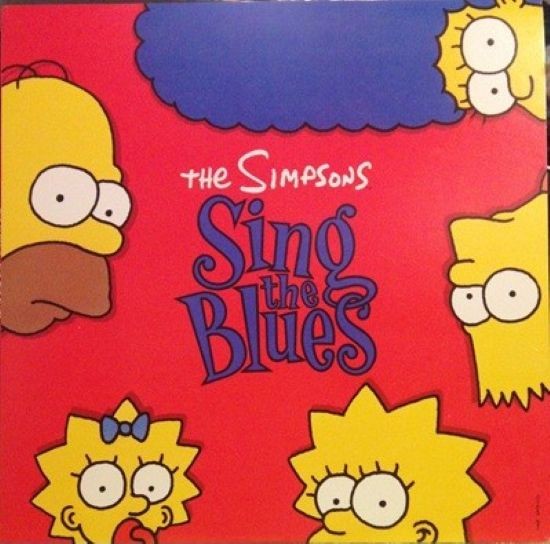
The Simpsons Sing the Blues, LP, Geffen Records, vinyl, 1990.
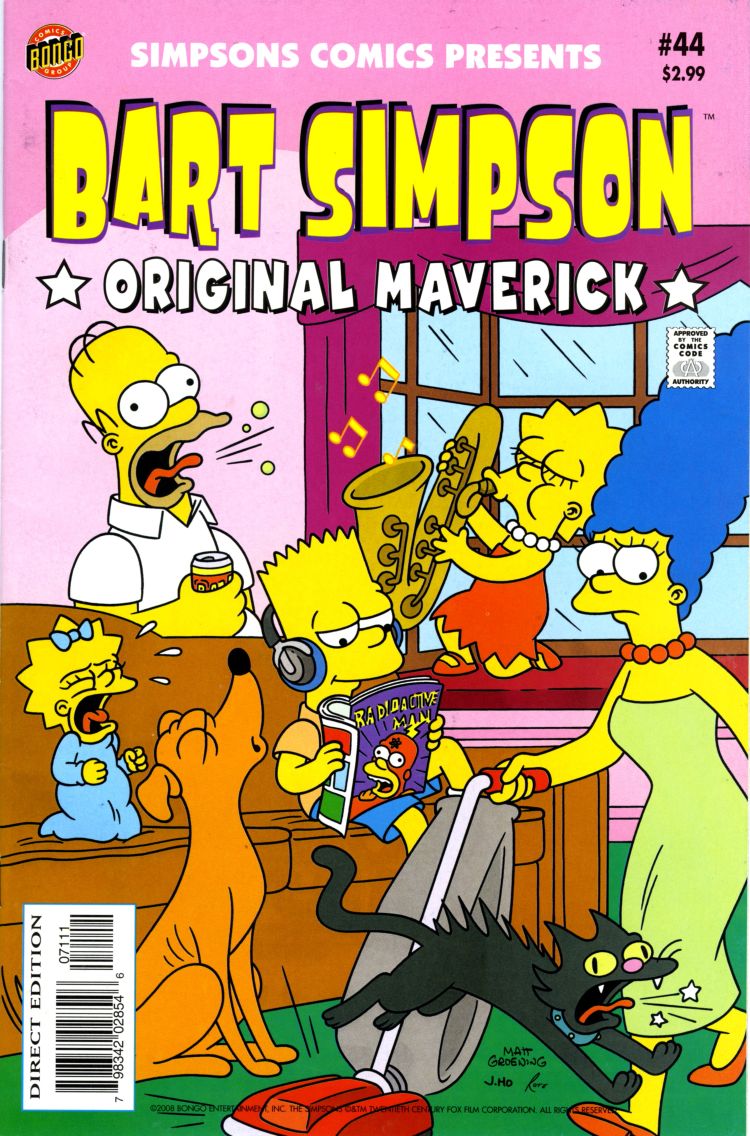
Bart Simpson, October 2008, Bongo Comics (PM-1806)
Donald Duck for President

Donald Duck for President - "Mickey Mouse Magazine" by K.K./Western, July 1936

Donald Duck never ran for President but he had his supporters. This pin is vintage 1976 support.

Donald Duck for President by Nick Perts on DeviantArt, 2020
With the Donald J. Trump Presidential campaign and election of 2016 it seems natural that memes and humor would continue to produce comparisons between Donald Trump and Donald Duck.
For more Donald Duck Phonographia see Donald Duck and the Phonograph
Mickey Mouse for President

Mickey for President, silkscreen by Sowa & Reiser - Disney character, 2020.
Although Mickey Mouse has never officially run for President, Mickey has received write-in votes for President, Governor and many downstream elections. His well-known name and popularity have made him an obvious selection if a voter wants to vote but simply doesn't like any of the candidates on the ballot. Most would call this a protest vote. Others might argue that by voting for Mickey they are simply voting for the best candidate.
Mickey's connections with recorded sound to tell his stories are multi-generational in the cartoon world which was also supported through the decades by his many records and Mickey Mouse Phonographs.
In the history of cartoons, Mickey's 1928 "Steamboat Willie" is one of the first cartoons with synchronized sound, and one of the first cartoons to feature a fully post-produced soundtrack. (Wikipedia).
Watch Steamboat Willy Here.
Mickey's actual words, however, were spoken for the first time in the 1929 cartoon "Karnival Kid" with Mickey saying "Hot Dogs. Hot Dogs." If Mickey was instead running for President he would have needed to "bring the mustard" to his speech.


Mickey Mouse in his first speaking animation -- "Karnival Kid."
See Mickey Mouse and the Phonograph for examples of record players using Mickey for promoting phonographs to the children's market.
ADDITIONAL NOTE: Mutt and Jeff
I have seen references of Mutt and Jeff being Presidential candidates of the Bughouse Party in 1908, but have not yet found supporting source material.
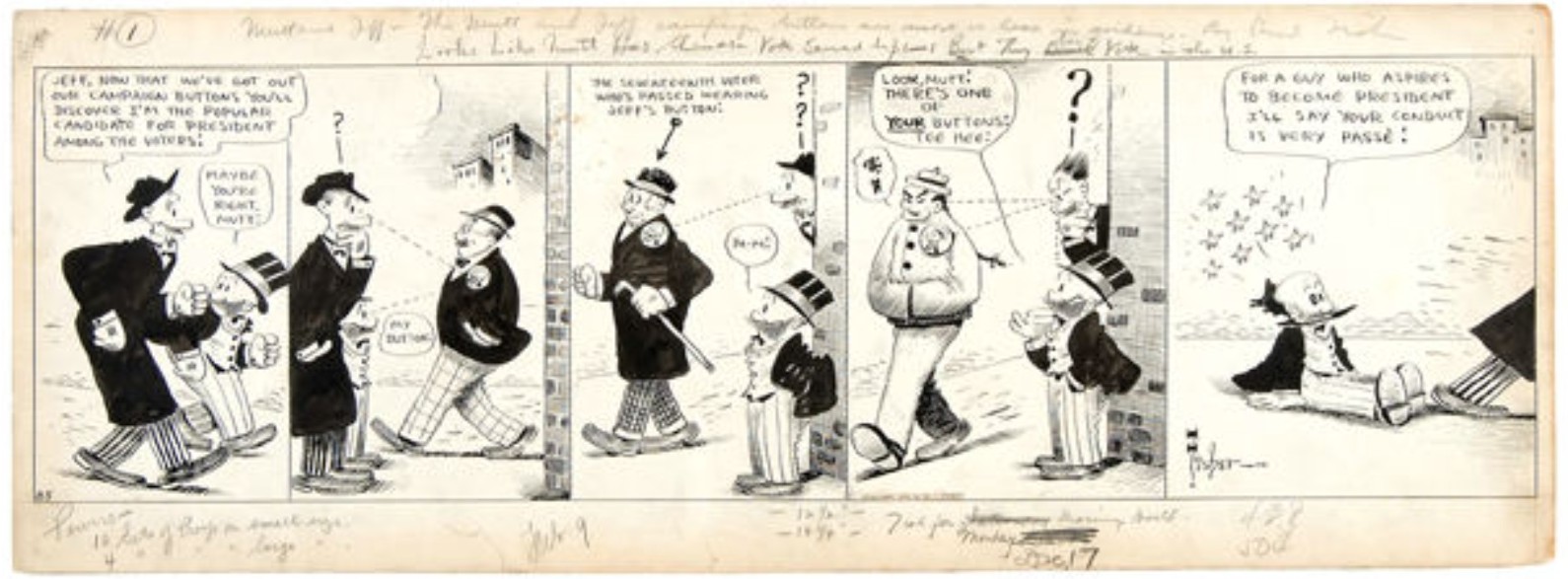
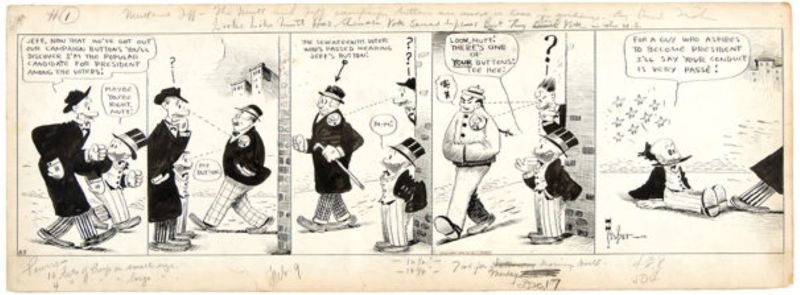
The earliest comic strip I've seen showing "Mutt and Jeff" by Bud Fisher Running for President is the newspaper comic strip published December 17, 1923. For Friends of the Phonograph there is no campaign song or recorded sound connection with Mutt and Jeff running for President - nevertheless, the 1923 comic is historic and noteworthy.
The original 1923 art work comic strip panels were sold by Hake's Auctions in 2009. The plot in this strip was to determine "who is the more popular candidate based on how many buttons they see."..."One of the wearers of a Jeff pin is Chinese which Mutt laughs at -- Margin above strip art has pencil notation reading "Mutt & Jeff - The Mutt & Jeff Campaign Buttons Are More Or Less In Evidence. Looks Like Mutt Has Chinese Vote Served Up - But They Can't Vote In The U.S." By Bud Fisher. This text is in Fisher's hand." (Hake's comic strips and item description from auction page information)
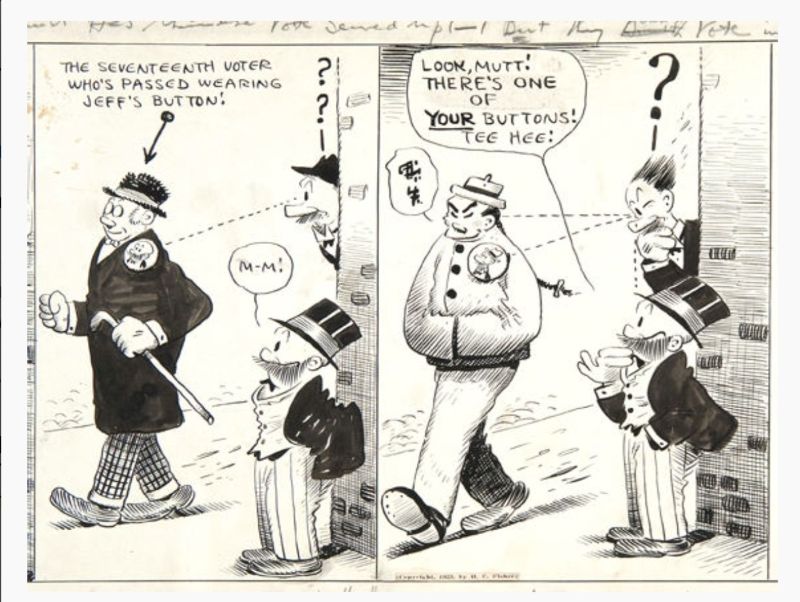
Comic strip December 17, 1923 (Hake's Auctions).
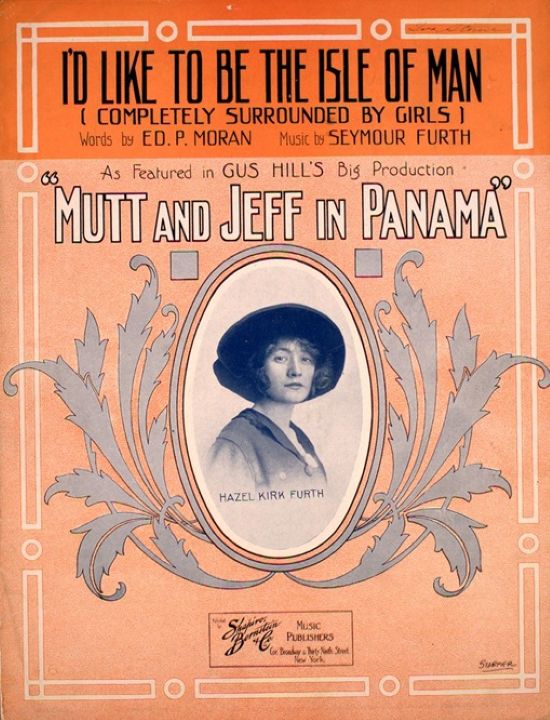
Words by Ed. P. Moran. Music by Seymour Furth. Shapiro, Bernstein & Co., Inc., Music Publishers, 224 West 47th St., New York, 1913. (Courtesy Lester S. Levy Sheet Music Collection, Johns Hopkins.)
In the 1913 production "Mutt and Jeff in Panama", the song "I'd like to be the Isle of Man" included these opening lines and the question from a Dad about what his Son would like to be:
Most fathers to their son say "Son what would you like to be?" I never will for-get the day Dad put that up to me,
I didn't say "Some day to be the President I'll try,"
I poked his "Nibs" right in the ribs, and made him this reply:
"I'd like to be the Isle of Man, Completely surrounded by girls, Just girls, Oh!"
When I told that to father, he said "Hey you, Stop that noise..."
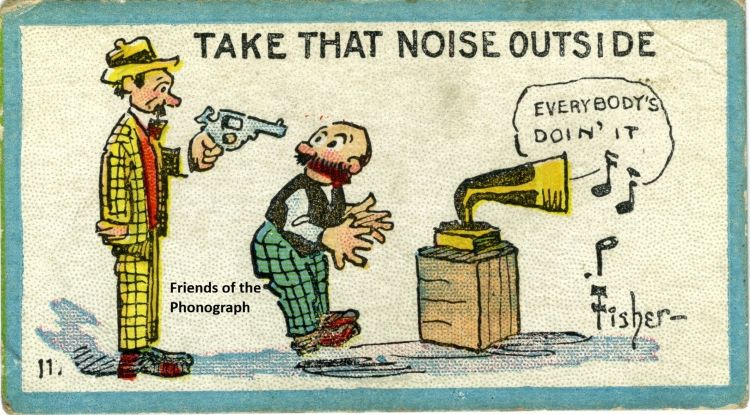
"Take that Noise Outside!" (ca.1911) Friends of the Phonograph (PM-0002).

Phonographia